
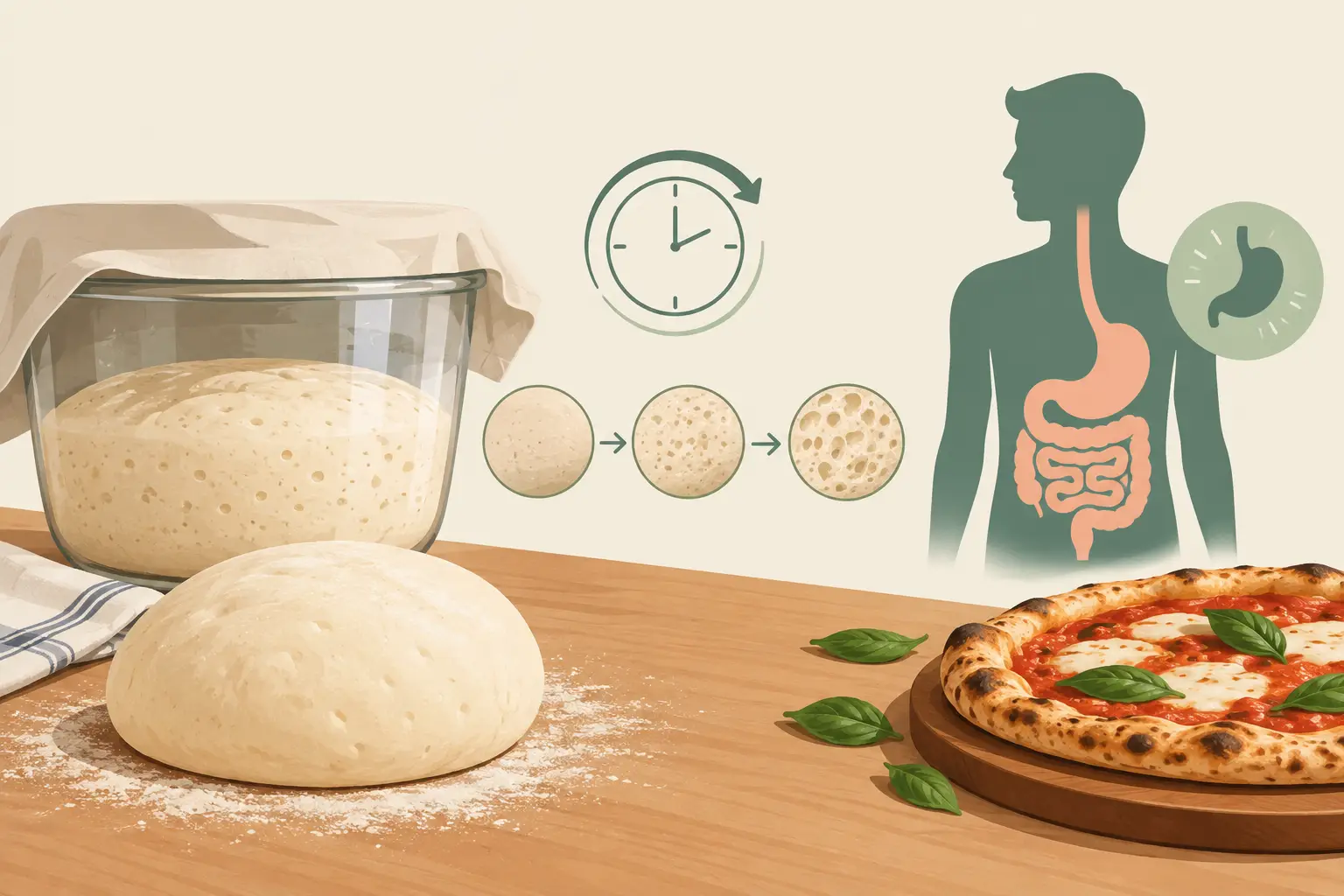
A great pizza can feel generous without feeling heavy. That balance is at the heart of pizza dough digestibility: not a shortcut, a diet claim, or a promise that one dough suits every person, but the result of careful fermentation, proper handling, and the discipline to give dough the time it deserves.
For Neapolitan pizza, the crust is never an afterthought. It is the foundation that carries the tomato, mozzarella, olive oil, and char of the oven. When it is made with precision, it should be tender at the center, beautifully risen at the edge, and light enough to let every ingredient speak.
What Pizza Dough Digestibility Really Means
When diners describe a pizza as digestible, they often mean it leaves them comfortably satisfied rather than overly full. They may notice a lighter texture, an open crumb, and a crust that does not sit heavily after the meal. Those qualities begin long before the pizza reaches the oven.
Digestibility is sometimes confused with low calories, low carbohydrates, or gluten-free pizza. These are separate questions. A pizza can be modest in portion and still be rushed or dense. It can contain gluten and still be made with a long, carefully managed fermentation. And a gluten-free pizza can be essential for a guest with celiac disease or gluten sensitivity, while having its own distinct formulation and handling requirements.
No pizza dough can make medical guarantees, and people with digestive conditions should follow the guidance of their healthcare professional. But for many diners, the way dough is fermented and baked makes a noticeable difference in how a pizza feels to eat.
Why Long Natural Fermentation Matters
Flour, water, salt, and yeast appear simple. In the hands of a pizzaiolo, however, their timing is everything. Natural fermentation gives yeast time to work gradually through the dough, producing carbon dioxide that creates the airy structure of a proper cornicione, the raised rim of a Neapolitan pizza.
During this rest, enzymes already present in flour help break down some starches into simpler sugars. Yeast uses a portion of those sugars as it ferments, while the dough develops flavor, aroma, and extensibility. The result is not just a technical improvement. It is the difference between a crust that tastes flat and bready and one with depth, tenderness, and a gentle, developed character.
A short, hurried rise can produce dough that looks ready before it has truly matured. It may bake up dense, tear easily, or rely on excess yeast to create lift quickly. Long fermentation asks for more planning and more attention to temperature, hydration, and timing, but it rewards that patience with a dough that is easier to stretch, lighter in texture, and more balanced on the plate.
That is why fermentation is a central part of pizza dough digestibility. It does not remove gluten, turn pizza into a health food, or eliminate every source of discomfort. It does create a more mature dough, and maturity matters.
Time Is Only One Part of the Process
“Long-fermented” is meaningful only when the entire process is well controlled. Dough can be left too long, fermented too warm, or handled poorly after it has matured. Any of those choices can compromise texture and flavor.
A skilled pizzaiolo watches the dough rather than relying only on the clock. Flour strength affects how much water the dough can hold and how long it can ferment. Room temperature changes the speed of yeast activity. The amount of yeast, the temperature of the water, and the size of the dough ball all influence the final crust. Precision is what turns time into quality.
Flour, Hydration, and the Feel of the Crust
The flour selected for pizza must match the method. Traditional Neapolitan dough needs flour with the strength to support a long fermentation while remaining supple enough to open by hand. The goal is not a thick, chewy bread crust. It is a soft, elastic dough that expands dramatically in a very hot oven.
Hydration matters just as much. A properly hydrated dough can bake into a crust with a delicate interior and crisp, blistered exterior. Too little water may produce a dry, tight crumb. Too much, without the technique to manage it, can make shaping difficult and leave the center of the pizza damp.
Salt also earns its place. Beyond seasoning, it supports dough structure and moderates fermentation. Even the smallest adjustment can change how the dough develops. This is why authentic pizza craft depends on repetition, observation, and respect for the ingredients rather than a single fixed formula.
For the diner, these decisions show up in every bite. The rim should be airy rather than gummy. The base should support its toppings without becoming cracker-like. The center should be soft but fully baked, with the fleeting moisture and fragrance that belong to a fresh Neapolitan pizza.
The Oven Finishes the Work
Fermentation prepares the dough. The oven gives it its final expression.
Neapolitan pizza is baked at exceptionally high heat for a short time. That intense environment rapidly expands the gases held in the dough, creating the characteristic leopard spotting and puffed edge. At the same time, the crust sets before it can dry out completely, preserving a tender interior.
A lower-temperature, longer bake produces a different style of pizza, and that can be wonderful in its own right. But it will not deliver the same contrast between charred exterior, soft center, and airy rim. For a Neapolitan pie, the heat must be decisive and the bake must be closely judged. A few seconds can separate a beautifully finished crust from one that is too pale, too dry, or underbaked in the center.
This is also where topping restraint matters. An overloaded pizza can trap moisture and weigh down even excellent dough. Quality tomatoes, fresh mozzarella, and carefully chosen ingredients should complement the crust, not bury it. The finest pizzas feel complete because every element has a purpose.
Is Long-Fermented Pizza Better for Everyone?
For many people, a well-fermented pizza feels lighter and more comfortable than a quickly risen dough. Still, individual experience varies. Portion size, richness of toppings, alcohol, personal food sensitivities, and the rest of the meal all play a role.
Long fermentation also does not make a wheat-based dough safe for someone with celiac disease. Traditional pizza dough contains gluten. Guests who need gluten-free food require more than a modified crust: they need strict ingredient controls, separate preparation practices, and protection from cross-contact.
At Kesté, that standard is treated with the seriousness it deserves. Gluten-free guests should be able to enjoy the same pleasure of a properly made pizza, not settle for an afterthought. A dedicated certified environment and rigorous anti-cross-contamination procedures support that promise, while the dough and technique are developed to deliver real texture and flavor.
For mixed groups, this distinction is especially valuable. One guest may choose traditional long-fermented dough for its classic Neapolitan character, while another needs a gluten-free pizza prepared under careful safety standards. Hospitality means making room for both at the same table.
How to Recognize a Carefully Made Dough
You do not need to stand beside the mixer to identify quality. Start with the crust. A mature Neapolitan dough has visible air pockets around the rim and a soft, flexible structure beneath its charred surface. It should have flavor on its own: lightly wheaty, gently fermented, and balanced by salt.
Pay attention to how the pizza is finished. A well-made pie is not rigid, greasy, or overloaded with cheese. It may be soft at the center, as Neapolitan pizza is meant to be, but it should not be raw or pasty. The toppings should taste clear and fresh, with the dough acting as a flavorful foundation rather than a filler.
Finally, consider the restaurant’s approach. Dough that receives a long natural fermentation requires advance preparation, skilled judgment, and a kitchen organized around consistency. It is a quiet form of hospitality: the work is done before the guest arrives, so the pizza can feel effortless at the table.
The next time a pizza arrives with a fragrant, blistered rim and a light, tender crumb, take a moment before the first bite. That ease is not accidental. It is the patient work of flour, water, heat, and a pizzaiolo who understands that the best dough is given time to become itself.