
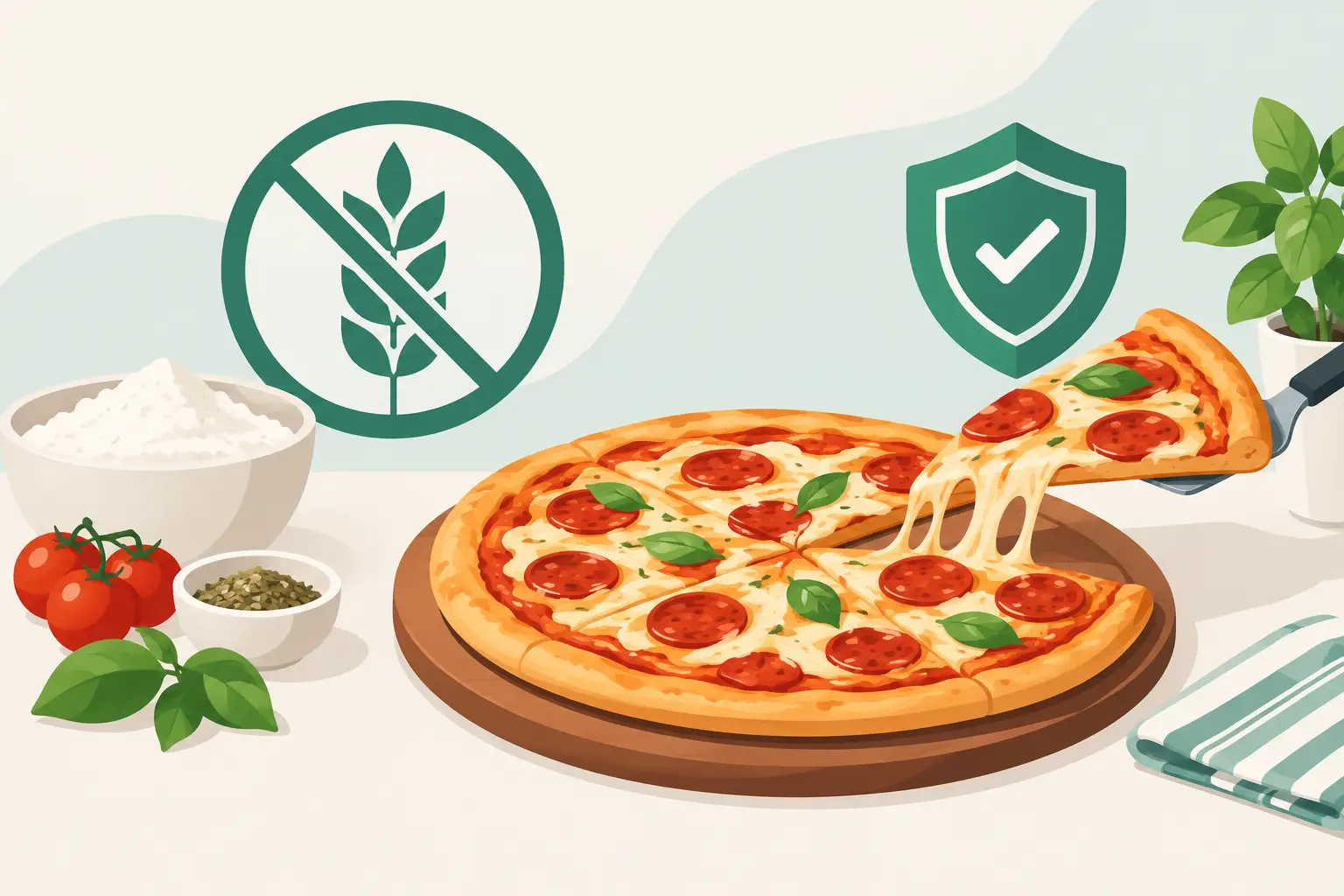
For a guest with celiac disease, a pizza cannot be called safe simply because the crust is gluten-free. Flour travels. A pizza peel used for a wheat pie can transfer residue. A shared cutter can turn a carefully made meal into a risk. True celiac pizza safety is built through disciplined systems, trained people, and a kitchen culture that understands the difference between a preference and a medical need.
That distinction should never take away from the pleasure of pizza. A properly prepared gluten-free Neapolitan-style pizza should arrive hot, fragrant, and complete: a crisp edge, a tender center, bright tomato, fine cheese, and the confidence to share a table with everyone else.
What Celiac Pizza Safety Actually Means
Celiac disease is an autoimmune condition in which gluten triggers damage to the small intestine. Gluten is found in wheat, barley, and rye. For someone with celiac disease, even a small amount of cross-contact can matter, which means ingredient selection is only the beginning.
A restaurant may offer a gluten-free crust and still be unable to provide a safe meal for a guest with celiac disease. The deciding factor is how that crust is stored, handled, topped, baked, cut, and delivered. Every point in the process needs intention.
The phrase “gluten-free” can describe a product. Celiac-safe preparation describes a system. Diners deserve to know which one a restaurant is offering before they order.
Cross-contact is the central concern
Cross-contact occurs when gluten-free food comes into contact with gluten through hands, tools, work surfaces, flour dust, containers, or shared cooking equipment. It is often invisible. A cook may make a beautiful gluten-free pie, but if they reach into a topping container after handling standard dough, the preparation has failed.
Pizza kitchens present particular challenges because wheat flour is part of the air, the bench, and the rhythm of traditional dough work. A busy service can also introduce pressure, which is why good intentions alone are not enough. The safest kitchens rely on repeatable procedures that hold up when the dining room is full.
The Kitchen Practices That Protect Gluten-Free Guests
A credible gluten-free program begins with physical separation. Gluten-free dough should be stored apart from wheat dough, in clearly identified containers, and prepared in a dedicated area. That area needs its own clean work surface and equipment, not merely a corner of the same flour-covered bench.
Dedicated tools matter just as much. A gluten-free pizza requires separate pans or screens, peels, cutters, utensils, and containers. Shared tools are one of the easiest ways cross-contact happens, especially when a kitchen is moving quickly.
Baking is another critical decision. A pizza placed directly onto the same oven floor where wheat-flour dough has been baking may not be appropriate for a person with celiac disease. Safe programs use a controlled method that creates a barrier between the gluten-free pizza and contaminated surfaces. The exact setup can vary by kitchen, but the principle does not: the gluten-free pie must remain protected from start to finish.
Ingredient control completes the chain. Cheese, sauces, vegetables, cured meats, and garnishes may be naturally gluten-free, yet they are not safe if shared scoops, hands, or utensils introduce flour. Clearly separated ingredients, labeled containers, and clean utensil practices allow the kitchen to protect the integrity of the pizza after the dough has been made.
Why Training Matters as Much as Equipment
Separate equipment is only effective when the people using it understand why it exists. A well-run gluten-free program trains every member of the team, from the host taking the order to the pizzaiolo finishing the pie and the server placing it on the table.
The front-of-house team should know how to communicate a celiac request clearly rather than treating it as a vague note. The kitchen should have a defined process for marking the order, changing gloves or washing hands when needed, using the dedicated station, and confirming the pie before it leaves the pass.
Consistency is a form of hospitality. Guests should not have to negotiate for care, explain cross-contact from scratch, or wonder whether their request got lost during a rush. Clear procedures make the experience calmer for the diner and more precise for the team.
At Kesté, the goal is not to offer a lesser version of pizza to gluten-free guests. It is to honor the same standards of flavor, fermentation, and craft while protecting the separate preparation environment that celiac diners require.
Questions Worth Asking Before You Order
Restaurants that take celiac needs seriously welcome specific questions. You do not need to apologize for asking them. A few direct questions can reveal whether a gluten-free option is designed for medical safety or simply menu variety.
Ask whether gluten-free pizzas are prepared in a separate area and whether dedicated pans, peels, cutters, and utensils are used. Ask how the pizza is baked and whether staff are trained to handle celiac orders. If an answer is uncertain, overly broad, or changes from one person to another, it may be wiser to choose another meal or restaurant.
It also helps to state your need plainly: “I have celiac disease and need my order prepared to avoid gluten cross-contact.” This gives the team the information they need to follow their protocol. Terms like “gluten-sensitive” or “low gluten” can be misunderstood, even when they are well-intended.
A Safe Pizza Must Still Taste Like Pizza
Safety and quality are not competing priorities. In fact, the care required for gluten-free preparation often reflects the same discipline that makes great pizza possible: respect for ingredients, attention to process, and no shortcuts when the details matter.
The texture of a gluten-free crust depends on thoughtful formulation and skilled handling. It should support the toppings without becoming dry or brittle. It should have character at the edge and a satisfying chew at the center. A long-fermented standard dough may be central to traditional Neapolitan craft, but gluten-free dough requires its own approach rather than an imitation made without care.
Toppings deserve equal attention. Great tomatoes, mozzarella, extra-virgin olive oil, and properly balanced ingredients make the experience feel generous rather than restrictive. The best gluten-free pizza is not a consolation prize. It is a considered pie, made for people who want the real ritual of pizza night without compromising their health.
Dining With a Mixed Group
One of the hardest parts of celiac dining is the feeling of being singled out. Pizza is communal by nature. It belongs at family dinners, office gatherings, travel days, birthdays, and late meals with friends. A thoughtful restaurant makes room for that shared experience.
For groups, it is helpful to tell the restaurant about celiac needs when reserving or ordering, particularly for larger parties and catering. Advance notice gives the team time to prepare correctly and answer any menu questions before the busiest part of service. It can also help the group decide how to share food without mixing slices, cutters, or serving utensils.
At the table, a celiac guest may prefer their pizza to arrive in its own box or on its own plate, with a dedicated cutter. Those details are not dramatic. They are practical safeguards that let everyone focus on the meal rather than managing uncertainty.
Confidence Comes From Transparency
No restaurant should promise what its kitchen cannot deliver. There are real differences between a gluten-free menu item, a gluten-aware option, and a pizza prepared under strict anti-cross-contact protocols. Honest language allows guests to make informed decisions and builds trust that lasts beyond one visit.
For diners, the standard is straightforward: look for restaurants that can explain their process without hesitation. For restaurants, the responsibility is higher: create systems worthy of that trust, revisit them often, and treat every celiac order with the same focused care given to the craft itself.
A safe slice should never feel like an exception. It should feel like what hospitality is supposed to be: a place at the table, prepared with knowledge, pride, and real attention to the person enjoying it.