
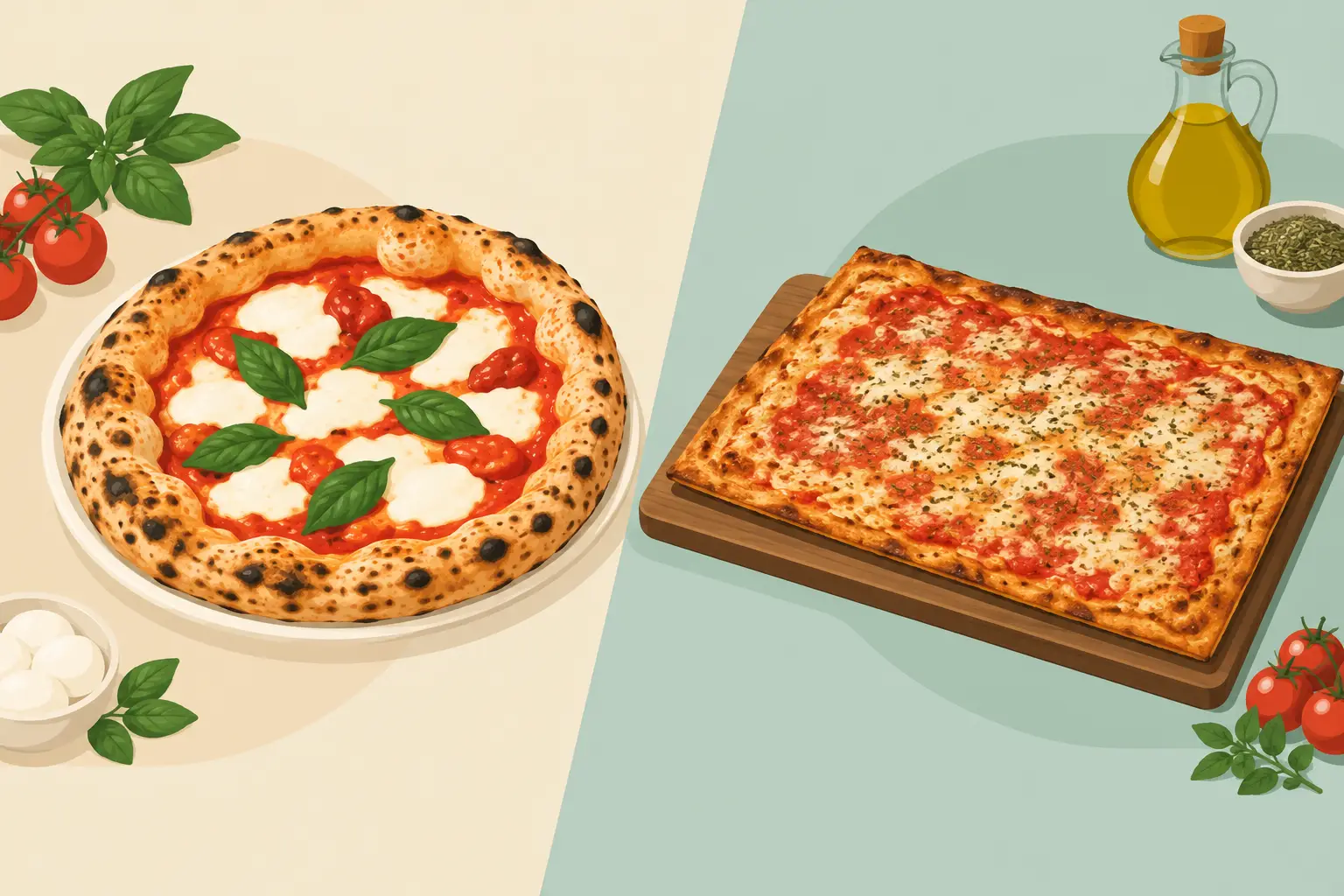
A pizza can be round, baked, and topped with tomato and mozzarella, yet tell a completely different story at the table. In the conversation around Neapolitan pizza versus Roman pizza, the real distinction is not simply soft crust versus crisp crust. It is a question of dough, oven heat, regional character, and the experience you want from each bite.
Naples gave the world pizza as a disciplined craft built on restraint: a tender, blistered cornicione, a supple center, and ingredients allowed to speak clearly. Rome developed its own proud traditions, from thin, crisp round pizzas to pan-baked slices cut to order. Both belong to Italy. Both can be exceptional. But they ask for different techniques and reward different appetites.
Neapolitan Pizza Versus Roman Pizza: The Essential Difference
Neapolitan pizza is defined by speed, heat, and a dough that must be handled with confidence. Traditionally, it is baked in a very hot wood-fired oven, often near 900°F, in roughly 60 to 90 seconds. That intense heat creates signature leopard spotting on the outer crust while keeping the interior light, moist, and flexible.
Roman pizza is less singular. The name can refer to pizza romana tonda, a round pizza with a very thin, shatteringly crisp base, or pizza al taglio, the rectangular pizza baked in a pan and sold by the slice. In Rome, pizza is often judged by crunch, structure, and the pleasure of a clean break beneath the toppings.
The difference matters because neither style should be measured by the standards of the other. A Neapolitan pizza is not underbaked because its center is soft. A Roman tonda is not dry because it is crisp. Each is the intended result of a regional point of view.
The Dough: Soft Stretch or Crisp Snap?
The soul of Neapolitan pizza begins with a simple dough: flour, water, salt, and yeast. The apparent simplicity is exactly why precision matters. Proper fermentation develops flavor, extensibility, and a tender open crumb without weighing down the finished pie. The dough is stretched by hand, never rolled, so the gases created during fermentation can remain in the rim.
A well-made Neapolitan crust should be airy at the edge and soft enough to fold naturally. It has chew, but not heaviness. The center may be delicate, particularly beneath tomatoes and fresh mozzarella, which release moisture as they cook. This is pizza designed to be eaten immediately, while the contrast between charred rim and tender interior is at its peak.
Roman tonda dough is rolled or stretched much thinner and baked longer at a lower temperature than a Neapolitan pie. The goal is a dry, crackling crust that stays flat and crisp from edge to center. It is often easier to eat with your hands because it has more rigidity, and it provides a strong base for toppings that might overwhelm a softer dough.
Pizza al taglio uses another approach. Its dough is commonly high-hydration and given substantial time to ferment, producing a light, irregular interior full of air pockets. Baked in rectangular pans, it can be crisp underneath, airy within, and sturdy enough for generous seasonal toppings. It is cut with scissors or a wheel, then sold by weight or portion.
The Oven Changes Everything
Technique cannot be separated from temperature. Neapolitan pizza relies on the fierce, radiant heat of a specialized oven. In little more than a minute, the dough rises dramatically, the rim chars in spots, and the toppings cook without losing their freshness. There is no time to hide behind excessive cheese or heavy sauce. Balance must be built into every element before the pie enters the oven.
Roman styles allow for a different relationship with heat. A longer bake dehydrates the dough more thoroughly, building crispness and stability. This is especially valuable for pizza al taglio, where toppings may include potatoes, roasted vegetables, cured meats, or cheeses added at different moments before and after baking.
Neither method is more serious than the other. They simply pursue different results. Neapolitan pizza captures a brief, high-heat transformation. Roman pizza is built around texture that holds its character longer.
Sauce, Cheese, and the Discipline of Restraint
A classic Neapolitan Margherita is a lesson in editing. Tomatoes, mozzarella, basil, olive oil, and dough must work as one. When ingredients are this visible, provenance matters. Bright Italian tomatoes, proper mozzarella, fragrant basil, and a naturally fermented dough leave no room for shortcuts.
The topping philosophy is often generous in spirit but restrained in weight. Too much sauce can flood the center; too much cheese can bury the dough. The finest Neapolitan pizzas taste composed rather than crowded, with a clear rhythm of acidity, dairy richness, smoke, and wheat.
Roman pizza can be more expansive. Roman tonda still benefits from balance, but its crisp base can support a broader range of toppings. Pizza al taglio is particularly expressive, often changing with the market and the season. A slice might feature squash blossoms and anchovies, mortadella and stracciatella, or simply olive oil, salt, and rosemary.
This does not mean Roman pizza is automatically heavier. At its best, it is equally thoughtful, with every topping chosen to preserve contrast between crisp crust, creamy elements, and savory depth.
How to Choose the Right Pizza for Your Table
Choose Neapolitan pizza when you want a meal centered on the pie itself. It is ideal for diners who appreciate fermentation, high-heat baking, and ingredients with a direct connection to Italian tradition. Plan to enjoy it as soon as it reaches the table. A fork and knife are welcome, especially for a soft-centered pizza, though many diners happily fold each slice.
Choose Roman tonda when a thin, crisp crust is your first priority. It suits the diner who wants every bite to crackle and prefers a pizza that remains firm in the hand. Choose pizza al taglio when variety is the pleasure: several toppings, shared pieces, and an easy, casual way to taste different combinations.
For a group, the answer may be both. A crisp Roman-style slice can be perfect for passing around, while a Neapolitan pie creates the kind of pause that asks everyone to sit down and eat while it is hot. The best choice depends on whether your table is looking for crunch, softness, portability, or a more traditional pizzeria moment.
Why Authentic Neapolitan Pizza Is So Exacting
Neapolitan pizza is sometimes mistaken for simple pizza because its ingredient list is short. In reality, simplicity makes every decision visible. Fermentation must be timed correctly. The dough must be properly hydrated and gently opened. The oven must be hot enough, the bake must be watched closely, and the ingredients must be proportioned with care.
That is why the pizzaiolo matters. Experience is what turns a soft dough ball into a pizza with lift at the edge, tenderness at the center, and a flavor that feels complete without excess. At Kesté, that standard is rooted in the work of Master Pizzaiolo Roberto Caporuscio, long-natural-fermented dough, and carefully selected Italian ingredients. The goal is not to imitate Naples with a label. It is to honor the technique in every pizza served.
The same philosophy should extend to guests who require gluten-free dining. A true hospitality standard is not offering a lesser alternative, but creating a pizza with its own thoughtful texture, flavor, and safety procedures. For diners with celiac-related needs, separate production and strict cross-contamination controls are part of the craft, not an afterthought.
A Matter of Appetite, Not a Competition
Rome and Naples have each given pizza lovers a lasting tradition. Roman pizza celebrates crispness, versatility, and everyday pleasure. Neapolitan pizza celebrates heat, fermentation, and the extraordinary character of a few well-chosen ingredients.
If you are craving the soft, blistered edge of a pie fresh from a blazing oven, order Neapolitan and eat it without delay. If your perfect slice begins with a decisive crunch, Roman pizza will feel right at home. The useful question is not which style wins, but what kind of pizza moment you want to create at the table.