
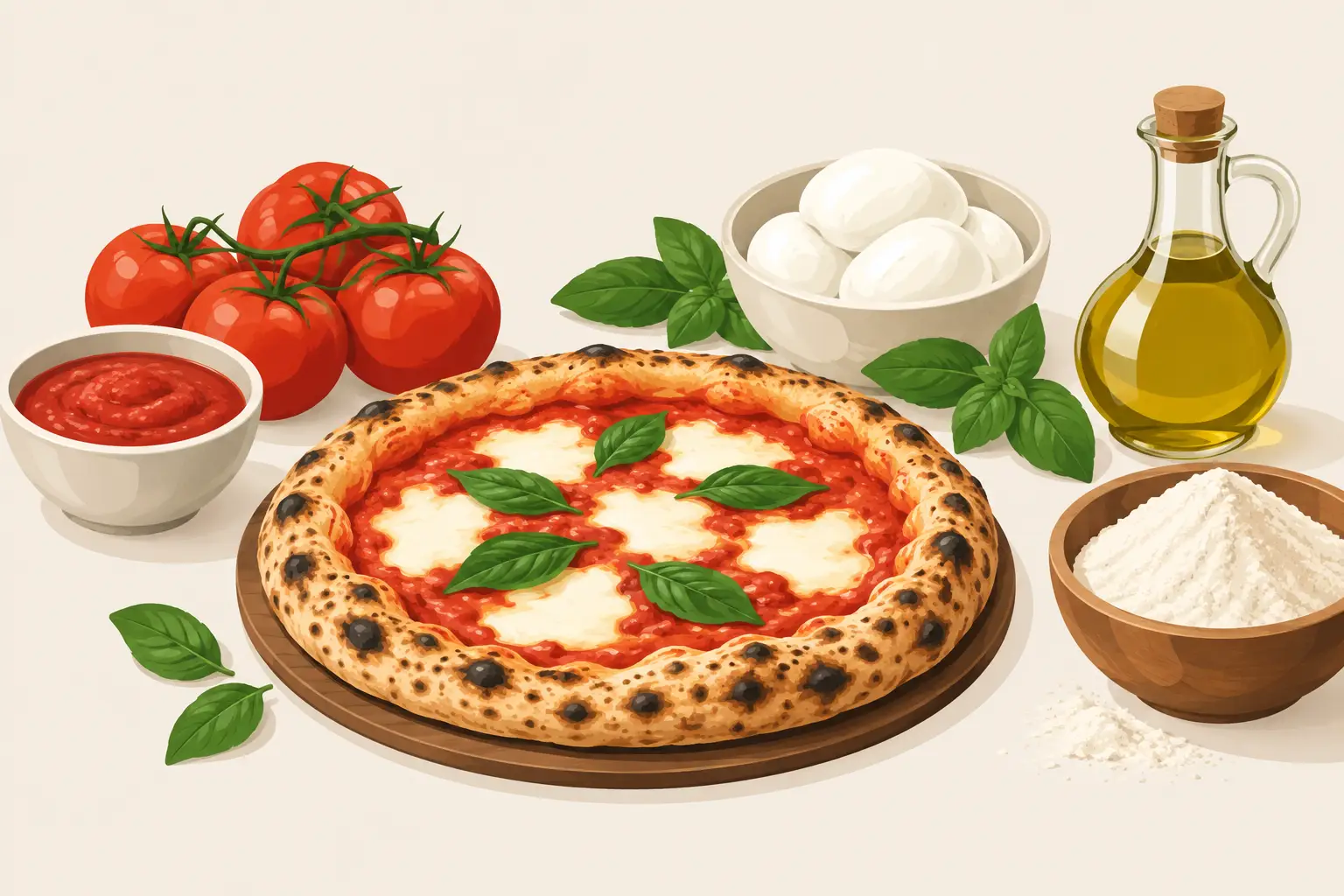
A Neapolitan pizza can look deceptively simple: a soft, blistered crust, red tomato, white cheese, green basil. But Neapolitan pizza ingredients are not interchangeable. Each one has a job to do, and the finished pie depends on their balance as much as the heat of the oven or the skill of the pizzaiolo.
This is why a truly memorable pizza tastes clear rather than crowded. The dough has character without becoming sour. The tomatoes bring freshness, not heaviness. The cheese melts into tender pools without flooding the center. Great pizza begins with restraint, careful sourcing, and the confidence to let a few exceptional ingredients speak for themselves.
The Neapolitan Pizza Ingredients That Matter Most
Traditional Neapolitan pizza is built around a short list of components: flour, water, salt, yeast, tomatoes, mozzarella, extra-virgin olive oil, and basil. The list is modest. The standards behind it are not.
A pizza maker cannot hide weak ingredients beneath a pile of toppings. In a hot wood-fired oven, every choice is amplified. Flour determines the crust’s aroma and chew. Tomato quality shapes the first bright note on the palate. Mozzarella affects moisture, richness, and the way a slice holds together. Even a final ribbon of olive oil changes the perfume of the pie.
Flour: The foundation of a light, tender crust
Neapolitan dough starts with finely milled wheat flour, often Italian “00” flour. The name refers to the fineness of the grind, not a guarantee of quality on its own. What matters is how the flour performs during fermentation, shaping, and the intense heat of the oven.
The right flour produces a dough that is extensible enough to open by hand, yet strong enough to hold its shape. It should bake into a cornicione with distinct air pockets, a gentle chew, and the delicate char known as leopard spotting. A crust should be soft enough to fold, but never gummy or doughy.
At Kesté, long natural fermentation gives the dough time to develop flavor and structure. Fermentation is not simply a trend or a label. It changes the character of the dough, creating a crust that tastes nuanced, fragrant, and easier to enjoy than one rushed from mixer to oven.
Water, salt, and yeast: Small measures, major consequences
Water may seem like the least romantic ingredient in pizza, but it affects hydration, texture, and fermentation from the first mix. A well-hydrated dough helps create the open, tender interior associated with Neapolitan pizza. Too little water can lead to a tight, dry crust; too much can make the dough difficult to handle and leave the center weak.
Salt sharpens flavor and regulates fermentation. It is one reason an excellent crust tastes complete even before tomato or cheese is added. Yeast begins the rise, but time does much of the deeper work. A long fermentation allows the dough to gain complexity without becoming dense or overly yeasty.
There is no single fermentation schedule that fits every kitchen. Room temperature, flour, hydration, and the day’s conditions all matter. Precision means responding to those variables, not following a clock blindly.
Tomatoes Should Taste Bright, Not Busy
For a classic pizza, tomatoes should taste like tomatoes. They need sweetness, gentle acidity, and enough freshness to cut through rich cheese and olive oil. San Marzano tomatoes, especially those protected by DOP standards, are prized for their balanced flavor and soft texture. But the label alone does not make a sauce exceptional. How the tomatoes are selected, crushed, seasoned, and used matters just as much.
Traditional Neapolitan tomato sauce is often intentionally simple. Crushed tomatoes may be seasoned with salt, then spread lightly across the dough. There is no need to cook the sauce into a heavy reduction before baking. The oven does the final work in seconds, concentrating the tomato flavor while keeping its lively character intact.
A common mistake is using too much sauce. Pizza is not pasta. A heavy layer steams the dough, overwhelms the cheese, and makes the slice difficult to lift. The best pies leave room for the crust, the cheese, and the fire to contribute their own voices.
Mozzarella Brings Richness, but Moisture Is the Test
Mozzarella is central to the identity of a Margherita, yet choosing the right mozzarella requires judgment. Fresh fior di latte, made from cow’s milk, offers a clean dairy flavor and dependable melt. Mozzarella di bufala brings deeper richness, tang, and a more luxurious texture, but it also carries more moisture.
Neither is automatically better. Fior di latte can be the ideal choice when the goal is a balanced, evenly melted pie with a crisp-tender center. Buffalo mozzarella can be extraordinary when it is drained properly and paired with ingredients that welcome its fuller flavor. In both cases, the cheese should be cut or torn with care, then used in a measured amount.
Too much cheese is one of the fastest ways to lose the Neapolitan character of a pizza. Instead of distinct pools of melted mozzarella, the center turns watery and heavy. A master pizzaiolo thinks about moisture before the pizza ever reaches the oven.
Parmigiano, pecorino, and the supporting role of aged cheese
Aged cheeses such as Parmigiano-Reggiano and pecorino can bring savory depth to a pie, especially pizzas with vegetables, sausage, or richer sauces. They are accents, not substitutes for mozzarella. Their saltiness and nutty complexity should deepen the flavor without making the pizza taste aggressively cheesy.
This is the discipline behind a great topping combination: every ingredient should have a reason to be there. If it does not improve texture, aroma, or balance, it does not belong on the pie.
Olive Oil and Basil Finish the Pizza With Purpose
Extra-virgin olive oil is often added before baking, after baking, or both. In the oven, it helps carry flavor across the surface and encourages a beautiful finish. Added after baking, it offers a fresher aroma and a peppery, fruity note that lifts the entire pie.
The quality is easy to taste. Good olive oil feels fragrant and alive, never flat or greasy. Because it is used sparingly, it is worth choosing carefully.
Fresh basil completes the classic Margherita with a clean herbal perfume. It should not be treated as decoration. Placed thoughtfully, basil gives a burst of freshness against sweet tomato and warm cheese. Depending on the pizza and the heat of the oven, it may be added before baking, after baking, or in both stages to preserve its aroma.
Toppings Need Balance, Not Excess
Beyond the Margherita, Neapolitan pizza welcomes ingredients such as roasted mushrooms, cured meats, spicy salami, artichokes, olives, seasonal vegetables, and seafood. Authenticity is not about refusing every variation. It is about applying the same standards of balance, quality, and technique to each one.
Watery vegetables may need roasting or draining. Delicate cured meats often belong on the pizza after baking so their flavor stays supple. Fresh ingredients that cook quickly can go on before the oven, while tender herbs and creamy finishes may be better added afterward. The goal is not a pizza piled high with options. It is a pie that remains light enough to finish and memorable enough to crave again.
That principle also matters for gluten-free guests. A gluten-free Neapolitan-style pizza deserves the same attention to fermentation, sauce, cheese, toppings, and oven technique as any other pie. It also requires rigorous separation in preparation to protect diners with celiac-related needs from cross-contact. Inclusion is not an afterthought when the ingredients and the process are treated with equal seriousness.
The Best Ingredient Is Judgment
Imported Italian tomatoes and cheeses, naturally fermented dough, fragrant basil, and excellent olive oil are a powerful beginning. Still, ingredients do not make pizza by themselves. A pizzaiolo must know when dough is ready, how much sauce a particular ball can carry, which mozzarella suits the pie, and when the oven has done exactly enough.
The next time a pizza arrives with a blistered edge and a fragrant center, notice the restraint behind it. A handful of well-chosen ingredients, handled with care, can carry you straight to Naples – one warm, beautifully balanced slice at a time.