
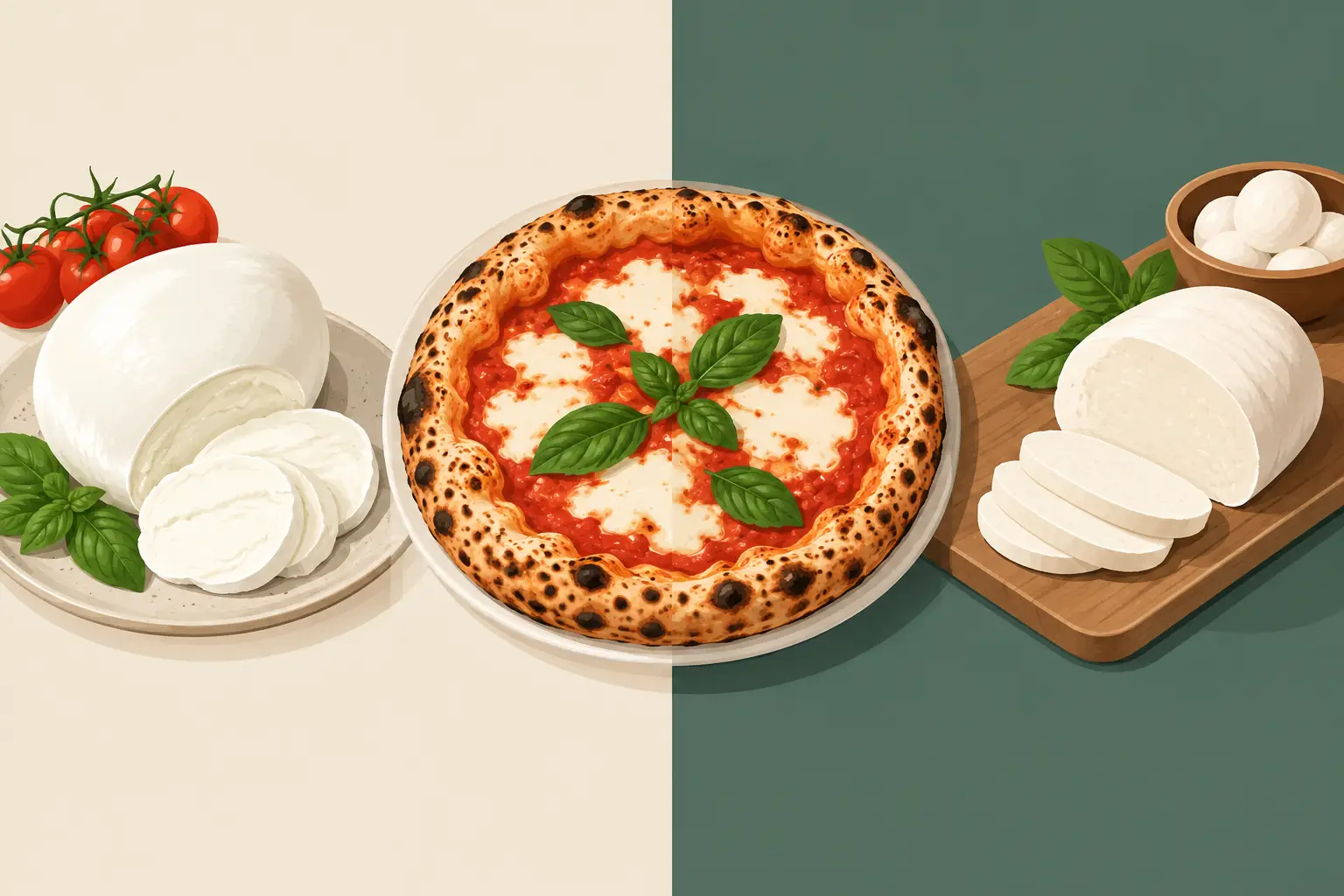
A pizza can look simple until it reaches the oven. Dough, tomatoes, cheese, heat, and a practiced hand must arrive at the right moment. That is why DOP versus standard mozzarella is not a minor shopping question. The cheese affects the flavor of every bite, the moisture at the center of the pie, and the way the crust holds its delicate balance.
For Neapolitan pizza, mozzarella is never just a topping. It is an ingredient with a place, a method, and a purpose. The best choice depends on the style of pizza, the oven, and the experience you want on the table.
What DOP Means on Mozzarella
DOP stands for Denominazione di Origine Protetta, or Protected Designation of Origin. It is a European certification that protects foods whose identity is tied to a specific geographic area and traditional production rules. With Mozzarella di Bufala Campana DOP, the designation tells a detailed story: the milk comes from water buffalo raised within designated parts of southern Italy, and the cheese is made and handled according to regulated standards.
That provenance matters because buffalo milk is naturally richer than cow’s milk. It brings a clean but pronounced dairy flavor, a gentle tang, and a supple, tender texture. Fresh buffalo mozzarella is usually packed in liquid, which preserves its character but also means it carries considerable moisture into a pizza oven.
DOP is not a blanket claim that every certified mozzarella will suit every pizza better than every other mozzarella. It is a guarantee of origin and method, not a substitute for a pizzaiolo’s judgment. A beautiful ball of buffalo mozzarella still needs proper draining, portioning, and timing.
What “Standard Mozzarella” Can Mean
Standard mozzarella is a broad category, and that is where comparisons can become misleading. It may refer to fresh cow’s-milk mozzarella, low-moisture shredded mozzarella, pizza cheese blends, or mass-produced cheese with stabilizers designed for a long shelf life. These products perform very differently.
Fresh cow’s-milk mozzarella, often called fior di latte in Italian pizza kitchens, can be exceptional. It tends to have a milder flavor and firmer body than buffalo mozzarella. When produced with excellent milk and handled carefully, it melts evenly, releases less water, and lets the tomato and naturally fermented dough speak clearly.
Low-moisture mozzarella is another matter. It is practical, familiar, and reliably stretchy. It can brown more readily and hold up well for pizzas baked longer at lower temperatures. That makes it useful for many American pizza styles, but its salt level, dense melt, and processed character can feel heavy on a quick-baked Neapolitan pie.
So the real question is not whether DOP is automatically good and standard is automatically bad. The useful question is: what cheese is this, how was it made, and what will it do in the oven?
DOP Versus Standard Mozzarella: Flavor on the Pie
Mozzarella di Bufala Campana DOP has a distinctive presence. Its flavor is milky, lightly acidic, and almost floral, with enough richness to stand against bright San Marzano tomatoes and olive oil. It has a freshness that can make a Margherita feel both simple and luxurious.
A quality cow’s-milk fior di latte is more restrained. It offers sweetness and creaminess without as much tang, creating a different kind of harmony. On a pizza with mushrooms, sausage, vegetables, or a more savory sauce, that quieter profile can be exactly right.
Standard low-moisture mozzarella delivers the flavor many American diners associate with pizza: salty, stretchy, and deeply melted. There is nothing inherently wrong with that expectation. But it is a different experience from a Neapolitan pizza, where cheese should complement the crust rather than form a thick, uniform blanket over it.
At Kesté, ingredient decisions begin with that balance. Master Pizzaiolo Roberto Caporuscio’s approach is rooted in the idea that a pizza should taste of its individual elements: the wheat in the dough, the tomato’s brightness, the olive oil’s perfume, and the cheese’s true character.
Moisture Is the Technical Difference You Can Taste
The greatest practical difference between buffalo mozzarella and many standard mozzarella products is water. Fresh DOP buffalo mozzarella contains a great deal of it. In a Neapolitan oven, where a pizza may bake in roughly 60 to 90 seconds, that moisture must evaporate quickly without soaking the center.
A skilled pizzaiolo drains the mozzarella well and tears or cuts it into pieces that melt with intention. Too much cheese, or cheese added straight from its packing liquid, can flood the middle of the pizza. The result may be a pale, wet center that overwhelms a beautifully fermented crust.
Fior di latte is often easier to manage because it is typically drier and more stable. It can be the stronger choice when a pie carries several toppings or when consistency across many pizzas is the priority. The trade-off is that it does not bring the same unmistakable buffalo-milk flavor.
Low-moisture mozzarella offers the most predictable melt and the least risk of excess water. Yet that predictability can come at a cost in a high-heat Neapolitan bake. It may melt into a heavier layer before the pizza has had time to develop the light, open character that defines the style.
The Oven Changes the Answer
Cheese cannot be judged apart from the oven. A wood-fired Neapolitan oven runs at temperatures far above those of most home ovens. Its intense heat cooks the pizza quickly, blistering the crust while preserving a soft interior. Fresh mozzarella is well suited to this fast, focused environment when used with precision.
At home, the calculation changes. A conventional oven usually takes longer to bake a pizza, giving fresh buffalo mozzarella more time to release liquid. Home cooks can improve the result by draining it thoroughly, patting it dry, and using a lighter hand than they think they need.
If your oven reaches only moderate heat, fior di latte or a good fresh cow’s-milk mozzarella may provide a more dependable result. For a New York-style or pan pizza with a longer bake, low-moisture mozzarella can make perfect sense. Authenticity is not achieved by forcing an ingredient into the wrong method. It comes from respecting the ingredient and the style of pizza you are making.
How to Choose the Right Mozzarella
Choose DOP buffalo mozzarella when you want its origin and flavor to be a central part of the pie. It shines on a classic Margherita, a pizza with a few carefully chosen ingredients, or any preparation where its freshness can remain visible. Look for the DOP mark on the package, keep it properly stored, and drain it before it reaches the dough.
Choose excellent fior di latte when you want a cleaner melt, less moisture, and a mild dairy foundation. It is often the practical favorite for topping-rich Neapolitan pizzas because it gives the pizzaiolo more control while still honoring Italian tradition.
Choose low-moisture mozzarella when your style calls for it. A longer bake, a crispier base, or a nostalgic cheese pull may benefit from its structure. The key is honesty: it creates a different pizza, not a lesser one by default.
Price is also part of the decision. DOP buffalo mozzarella costs more because the milk, regional production, certification, and highly perishable nature of the cheese all demand care. If it is being used on a pizza crowded with aggressively flavored toppings, much of that value can disappear. Save it for a pie that gives it room to be tasted.
A Better Way to Taste the Difference
Try the comparison with two simple pizzas rather than a complicated menu of toppings. Use the same dough, tomato, olive oil, and bake time. Make one with well-drained DOP buffalo mozzarella and the other with a high-quality fior di latte. Notice the center of the pie, the aroma, the salt level, and whether the cheese supports or dominates the crust.
The better mozzarella is the one that makes the whole pizza more alive. When the cheese is chosen with care and handled with discipline, each slice carries the hospitality of Naples: generous, precise, and meant to be enjoyed right away.