
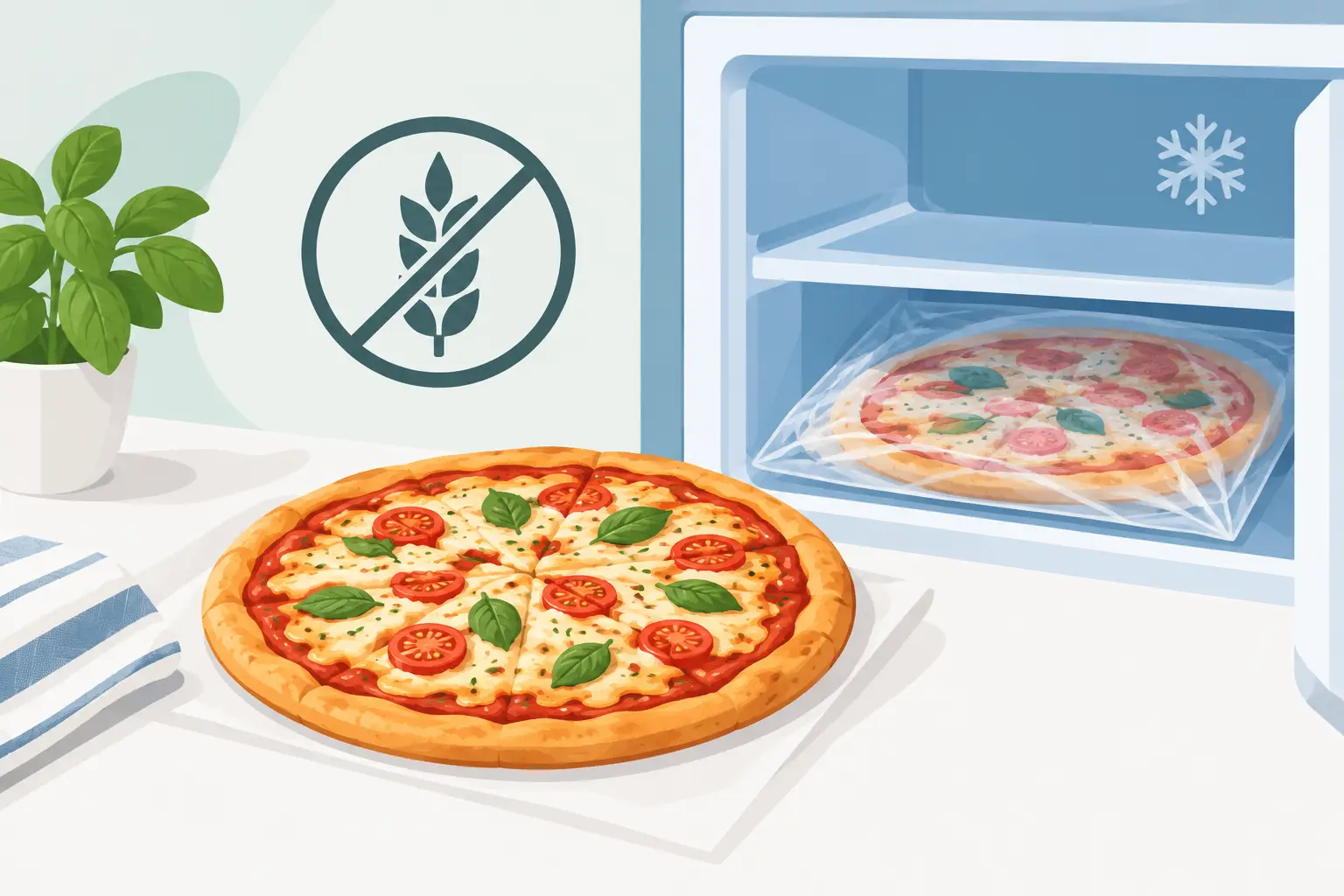
A great gluten-free pizza is too carefully made to waste. Whether you ordered extra for tomorrow’s lunch or want to keep a proper pizza night close at hand, the answer to “can gluten free pizza freeze” is yes. The real question is how to freeze it without sacrificing the crisp base, airy edge, and bright flavor that make a Neapolitan-inspired pie worth returning to.
Gluten-free pizza can freeze beautifully when it is cooled, wrapped tightly, and reheated with enough direct heat to revive the crust. It will not emerge exactly as it did from a blazing pizza oven – no frozen pizza can promise that – but thoughtful handling makes a remarkable difference.
Can gluten free pizza freeze well?
Yes, especially when the pizza is frozen soon after it has cooled. Gluten-free crusts often have a different structure from traditional wheat dough. Without gluten’s elastic network, they can be more vulnerable to drying out, turning crumbly, or becoming dense after repeated changes in temperature. That does not mean they are unsuitable for freezing. It simply means the details matter.
A well-made gluten-free pizza has a carefully balanced dough, proper hydration, and a bake that sets the base without drying it out. Those qualities give it a better chance of reheating successfully. The topping also matters. A simple Margherita, cheese pizza, or pie with roasted vegetables usually freezes more predictably than a pizza loaded with watery ingredients.
The goal is to protect two things: moisture inside the crust and freshness on the surface. Air is the enemy in the freezer. It encourages freezer burn, dulls the flavor of the cheese and tomato, and leaves the crust leathery rather than tender.
Freeze leftover pizza while it is still fresh
Do not put steaming pizza directly into the freezer. The trapped heat creates condensation, and that moisture turns to ice. When reheated, the pizza can become wet on top and soft underneath.
Instead, let slices or a whole pie cool at room temperature until they are no longer warm, usually 20 to 30 minutes. Do not leave it out for hours. Once cool, freeze it promptly to preserve both quality and food safety.
For the best result, separate slices before wrapping. Place a small piece of parchment paper between slices if you plan to stack them. Then wrap each portion tightly in plastic wrap or foil and place the wrapped pizza in a freezer-safe bag or airtight container. Press out as much air as possible before sealing.
If you are freezing a whole pizza, use the same approach: wrap it closely, then add a second protective layer. A pizza box alone is not enough. Cardboard lets in air and absorbs moisture, which is exactly what you do not want during a long stay in the freezer.
For best flavor, enjoy frozen gluten-free pizza within one to two months. It remains safe longer when continuously frozen, but the crust and toppings are at their best when they have not been waiting too long.
A note for celiac and gluten-sensitive households
Freezing does not remove gluten or correct cross-contact. If the pizza is intended for someone with celiac disease or a medically necessary gluten-free diet, protect it from the moment it enters your kitchen.
Store it away from gluten-containing foods, use clean hands and clean wrapping materials, and label it clearly. When reheating, avoid a baking sheet, rack, or countertop that may carry flour or crumbs. A dedicated pan, fresh parchment paper, or clean foil provides a practical extra layer of care.
At Kesté, gluten-free pizza is treated as a complete pizza experience, not a compromise. That same respect should continue at home: careful storage, clean tools, and enough heat to bring the crust back to life.
How to reheat frozen gluten-free pizza
The oven is the most reliable choice because it heats the crust and toppings together. Skip the microwave if you can. It is fast, but it tends to make gluten-free crust gummy or tough, particularly after freezing.
Preheat your oven to 400 to 425°F. Place the frozen pizza or slices directly on a clean oven rack for the crispest bottom, or set them on a preheated baking sheet for easier handling. If cross-contact is a concern, use a clean sheet pan lined with parchment. Heat until the cheese is melted, the center is hot, and the bottom feels firm and crisp – usually 10 to 16 minutes for slices, depending on their thickness and your oven.
A whole pizza may need a little longer. Check it after 15 minutes, then continue in short intervals. If the cheese is browning before the center is heated through, loosely tent the top with foil while the base finishes crisping.
An air fryer is also excellent for one or two slices. Set it around 350 to 375°F and check after five minutes. The circulating heat can restore a pleasantly crisp edge, but air fryers vary widely, and high heat can darken delicate gluten-free crusts quickly. Work in a single layer and watch closely.
A skillet can rescue a slice when you do not want to heat the oven. Warm a clean, covered skillet over medium-low heat, set in the slice, and heat until the bottom crisps and the cheese softens. A few drops of water placed beside, not on, the pizza can create gentle steam under the lid and help warm the toppings. Keep the heat moderate so the bottom does not burn before the center is ready.
Should you thaw gluten-free pizza first?
Usually, no. Reheating from frozen is often better for the crust because it limits the time the pizza spends absorbing moisture as it thaws. Put it straight into a hot oven, air fryer, or skillet and let the heat do its work.
There are exceptions. A thick, heavily topped pizza can benefit from 15 to 20 minutes on the counter before baking, especially if your oven tends to brown the outside quickly. But avoid thawing it overnight in the refrigerator and then letting it sit around. The crust may lose some of its structure, and the toppings can release water.
If the pizza has already thawed in the refrigerator, reheat it within a day. Do not refreeze it unless it was thawed only briefly and stayed properly cold. Each freeze-thaw cycle takes something from the texture, and pizza deserves better than a tired crust.
Toppings that freeze best
Pizza does not need to be plain to freeze well, but some toppings travel through the freezer more gracefully than others. Mozzarella, tomato sauce, cured meats, cooked sausage, mushrooms, onions, and roasted peppers generally reheat well. Their flavors remain clear, and they do not add excessive moisture.
Fresh greens, delicate herbs, burrata, and prosciutto are different. Their character is best preserved by adding them after reheating. If you know in advance that you will freeze part of a pizza, consider leaving these finishing ingredients aside. Add fresh basil, arugula, a ribbon of prosciutto, or a spoonful of creamy cheese once the pizza is hot again.
This is not a rule about authenticity for its own sake. It is about protecting the contrast that makes pizza memorable: a crisp base, lively tomato, molten cheese, and fresh elements that still taste fresh.
A better freezer habit for pizza nights
If your household regularly keeps gluten-free pizza on hand, freeze portions with a plan. Mark the date and topping on each package. Keep slices flat until frozen solid, then stand them upright in a labeled freezer container to save space. This makes it easy to take out exactly what you need, whether it is one quick lunch or dinner for the family.
For mixed households, make the gluten-free portions easy to identify at a glance and give them a protected place in the freezer. This small habit helps prevent confusion on busy nights and supports the care gluten-free guests should be able to expect.
A frozen slice will never replace the pleasure of pizza served moments after the oven, when the crust is at its most expressive. But wrapped with care and reheated with patience, it can still bring a little of that warm, generous table home whenever you need it.