
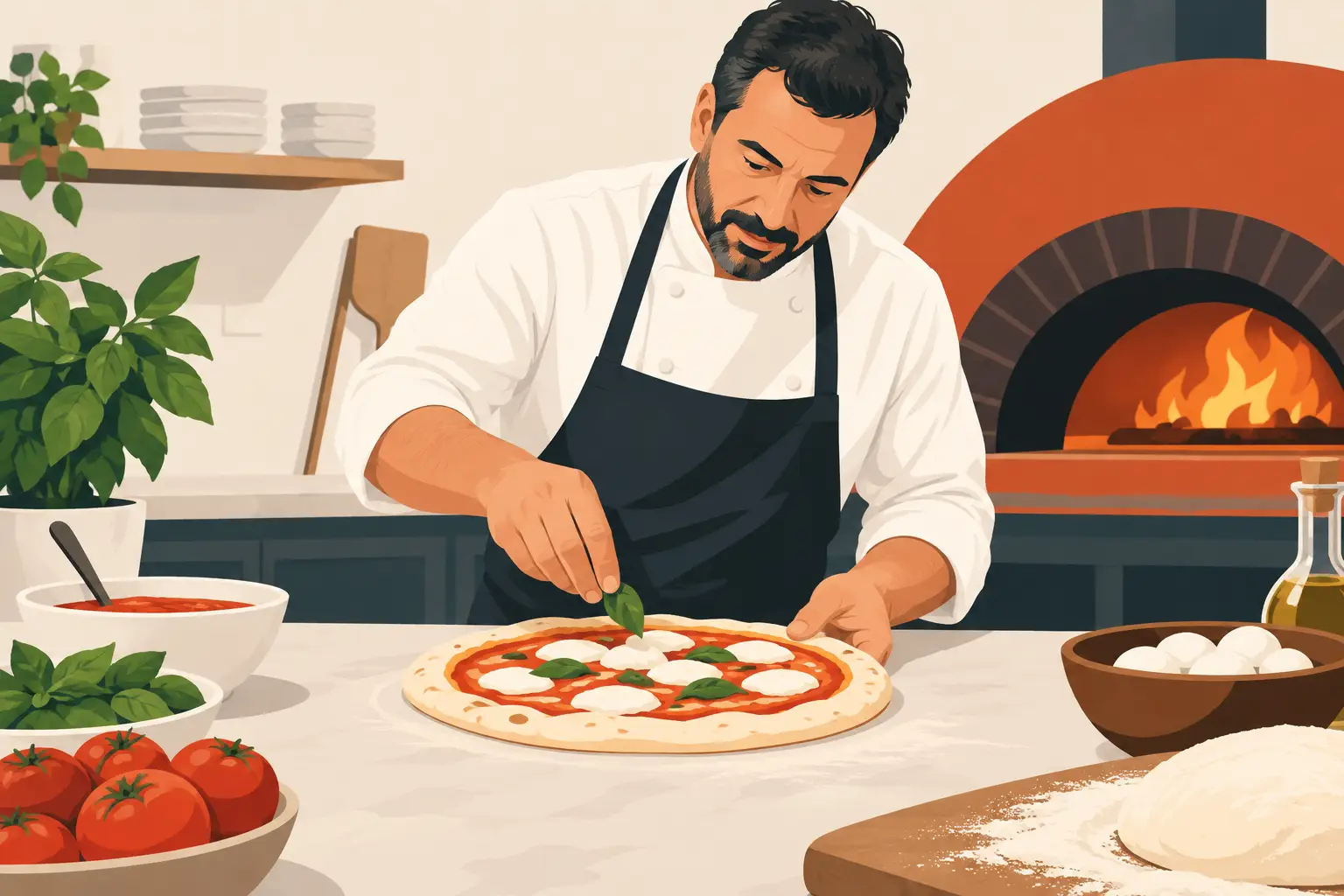
A great Neapolitan pizza is decided long before it reaches the oven. Roberto Caporuscio techniques begin with respect for time, temperature, flour, and the living character of dough. The final pie may arrive at the table in minutes, but its flavor, lightness, and unmistakable tender crust are the result of disciplined choices made over many hours.
For a Master Pizzaiolo, pizza is not a formula to repeat without thought. It is a craft of observation. Humidity changes. Flour behaves differently from one day to the next. Dough matures at its own pace. The work is knowing when to intervene, when to wait, and how to protect the ingredients that give a Neapolitan pizza its identity.
Roberto Caporuscio Techniques Start With the Dough
The foundation is naturally fermented dough. Fermentation is not simply a waiting period before service. It is the process that develops aroma, improves texture, and helps create a crust that is light enough to enjoy from the first slice to the last.
A properly matured dough should feel alive in the hands: soft, extensible, and full of air without becoming weak or sticky. That balance comes from close control of hydration, yeast, dough temperature, and resting time. More water can contribute to an open, delicate crumb, but it also asks more of the pizzaiolo. A wetter dough is less forgiving, particularly when it must be shaped quickly during a busy service.
The goal is never a dramatic crust for its own sake. It is a crust with flavor and structure: gently blistered at the edge, soft through the center, and strong enough to hold tomatoes, mozzarella, and olive oil without turning heavy. Natural fermentation gives the dough a quiet depth that no shortcut can replace.
Reading the Dough, Not Just the Clock
Time matters, but the clock alone cannot tell a pizzaiolo when dough is ready. Dough responds to room conditions, the temperature of the water, the strength of the flour, and the pace of fermentation. A skilled maker reads its volume, aroma, elasticity, and surface tension before deciding how it should be handled.
That judgment is one reason authentic pizza cannot be reduced to a list of ingredients. Two doughs made from the same formula can need different care. One may be ready to open immediately; another may benefit from more rest. Precision is not rigidity. It is the ability to make the right adjustment while remaining faithful to the tradition.
Hand Opening Protects the Pizza’s Character
Once mature, the dough is opened by hand. The center is gently pressed outward while the outer edge is protected, preserving the air that will become the cornicione, or raised rim. A rolling pin would flatten that structure and erase much of the dough’s potential.
This is a small movement with a major effect. Press too aggressively and the crust loses its lift. Stretch too little and the center can remain thick and underbaked. Stretch too far and the dough may tear or become too thin to support its toppings. The ideal disc is even, supple, and prepared to expand in the intense heat of the oven.
Hand opening also keeps the pizza personal. Every dough ball has its own feel, and every pizza maker brings a practiced touch to the bench. Consistency matters deeply, but it is achieved through craft, not through flattening every variation out of the process.
Toppings Need Restraint
Neapolitan pizza is often misunderstood as minimal because it uses only a few ingredients. In truth, restraint demands more discipline than excess. San Marzano-style tomatoes, fresh mozzarella, extra-virgin olive oil, basil, and a measured touch of salt each have a job to do.
The tomato should taste bright and clean, not buried beneath sugar or heavy seasoning. Cheese should melt into the pizza rather than cover it like a blanket. Olive oil should add fragrance and roundness, not grease. When ingredients are of genuine quality, the pizzaiolo’s work is to let them remain recognizable.
This is where imported Italian DOP-quality ingredients matter. Provenance is not decoration on a menu. It affects sweetness, acidity, moisture, aroma, and the way each component responds to the oven. A pizza with fewer toppings leaves nowhere for poor ingredients to hide.
Heat Is a Technique, Not Just a Temperature
The Neapolitan oven is defined by fierce heat, but high temperature alone does not create a great pizza. The oven floor, the flame, the humidity inside the chamber, and the position of the pizza all matter. A short bake demands full attention.
A pizzaiolo must turn the pizza at the right moment so the crust colors evenly and the underside cooks without scorching. The flame can provide beautiful char and toasted aroma, yet too much direct exposure can overwhelm the dough or bitter the cheese. The pizza must emerge with leopard-spotted blistering, a tender center, and toppings that are cooked but still fresh in character.
There is no benefit in treating char as a performance. A few dark spots are part of the style; a burned crust is simply burned. The distinction comes from judgment. Heat should reveal the flavor of the dough and ingredients, never disguise them.
The Balance Between Softness and Structure
True Neapolitan pizza is meant to be soft. It does not behave like a stiff, heavily crisped slice made for long holding times. Its center has tenderness, its rim has air, and it is best enjoyed when it reaches the table fresh from the oven.
That said, softness should not mean sogginess. The balance depends on the dough’s maturity, the amount of sauce, the moisture of the cheese, and the bake itself. A Margherita requires a different eye than a pizza topped with vegetables, cured meats, or richer cheeses. Certain toppings release more water, so they require more careful portioning and placement.
This is why technique remains essential even with exceptional ingredients. The best mozzarella cannot correct an overworked dough. The best tomatoes cannot rescue an underbaked center. Every decision is connected.
Tradition Has Room for Every Guest
At Kesté, honoring Neapolitan tradition also means welcoming guests who cannot eat gluten. Gluten-free pizza deserves more than an afterthought or a compromise that leaves diners watching everyone else enjoy the real experience.
Creating a satisfying gluten-free Neapolitan-style pizza requires its own knowledge of hydration, texture, shaping, toppings, and oven behavior. The dough will not respond exactly like wheat dough, and pretending otherwise would not serve the guest. The standard should be a pizza with a properly risen edge, balanced flavor, and a center that feels complete, not merely acceptable.
Safety is part of that craft. Dedicated gluten-free production and strict anti-cross-contamination procedures protect guests with celiac-related needs while allowing mixed groups to share a meaningful meal. Hospitality is not complete if one person at the table is asked to settle for less.
Why These Techniques Matter Beyond the Oven
Roberto Caporuscio’s approach honors pizza as an expression of Naples, but it also explains why a restaurant pie can feel so different from a convenient imitation. The difference is not one secret ingredient. It is a chain of choices: allowing dough to ferment naturally, opening it with care, using ingredients with integrity, topping with restraint, and baking with focused attention.
For diners, that care is felt in the first bite. The crust is fragrant rather than bready. The tomato tastes vivid. The cheese is present without weighing down the slice. The pizza feels satisfying, yet it invites another bite because it has been balanced rather than overloaded.
The most useful way to recognize great Neapolitan pizza is to look past spectacle. Notice whether the rim is airy but not dry, whether the center is tender but not wet, and whether every ingredient still tastes like itself. When those details come together, pizza becomes what it has always been at its best: generous food, made with discipline, meant to be shared.