
A properly stretched Neapolitan pizza begins to tell its story before it reaches the oven. The dough should feel alive: soft beneath the fingertips, lightly aerated, and willing to open without a fight. Stretching Neapolitan pizza dough is not about forcing a ball into a circle. It is the quiet, practiced work of protecting the gas created during long natural fermentation so the crust bakes with a tender center and a lofty, leopard-spotted cornicione.
At Kesté, that attention is part of the promise behind every pizza. Great flour and Italian tomatoes matter, but the final shape depends on the hands that handle the dough. A few deliberate movements preserve what time, temperature, and fermentation have built.
What the Dough Should Feel Like Before You Stretch
Stretching starts well before the dough touches the bench. If a dough ball is cold, tight, or under-fermented, even careful technique will feel difficult. If it is overproofed, it may spread too quickly, tear at the center, or lose the structure needed to hold its rim.
A ready dough ball should be at room temperature and relaxed. Its surface will be smooth and gently rounded, with a little give when pressed. A light fingertip impression should slowly ease back, rather than springing back immediately or remaining deeply sunken. The exact timing depends on the flour, hydration, room temperature, and length of fermentation, which is why a clock alone cannot decide readiness.
For home pizza makers, this is often the most useful adjustment: give refrigerated dough enough time to wake up. A dough ball pulled straight from the refrigerator may be flavorful, but it is not ready to stretch. Let it sit, covered, until it loses its chill and becomes supple. In a warm kitchen, keep an eye on it. Warm dough moves fast.
Set Up the Bench With a Light Touch
Use a clean, dry work surface with just enough flour to prevent sticking. Many pizzaioli use a blend of flour and fine semolina for a little extra slip. Too much flour, however, creates its own problems. It can dry the outside of the dough, leave a raw, dusty taste on the baked base, and burn in a hot oven.
Turn the dough ball gently into the flour, then lift it and tap away the excess. The top and bottom should be lightly coated, not buried. Place it on the bench with the smoother side facing down if that is how it rested in the proofing container. This can help preserve the rounded surface that will become the outer rim.
Avoid a rolling pin. It makes a neat circle, but it also presses out the very air that gives Neapolitan pizza its character. The goal is not perfect geometry. A handmade round with a little personality is far more valuable than a flawless disk with a flat, lifeless edge.
Stretching Neapolitan Pizza Dough: Start From the Center
Begin by placing the pads of your fingers in the center of the dough. Press gently outward in small, overlapping motions, leaving a border of about three-quarters of an inch to one inch untouched. That untouched band is the future cornicione.
Think of the movement as guiding air toward the edge, not squeezing it out. Work from the middle toward the rim, rotating the dough as you go. The center will gradually thin and widen, while the outer ring stays pillowy. Do not poke or aggressively press the border once you have defined it.
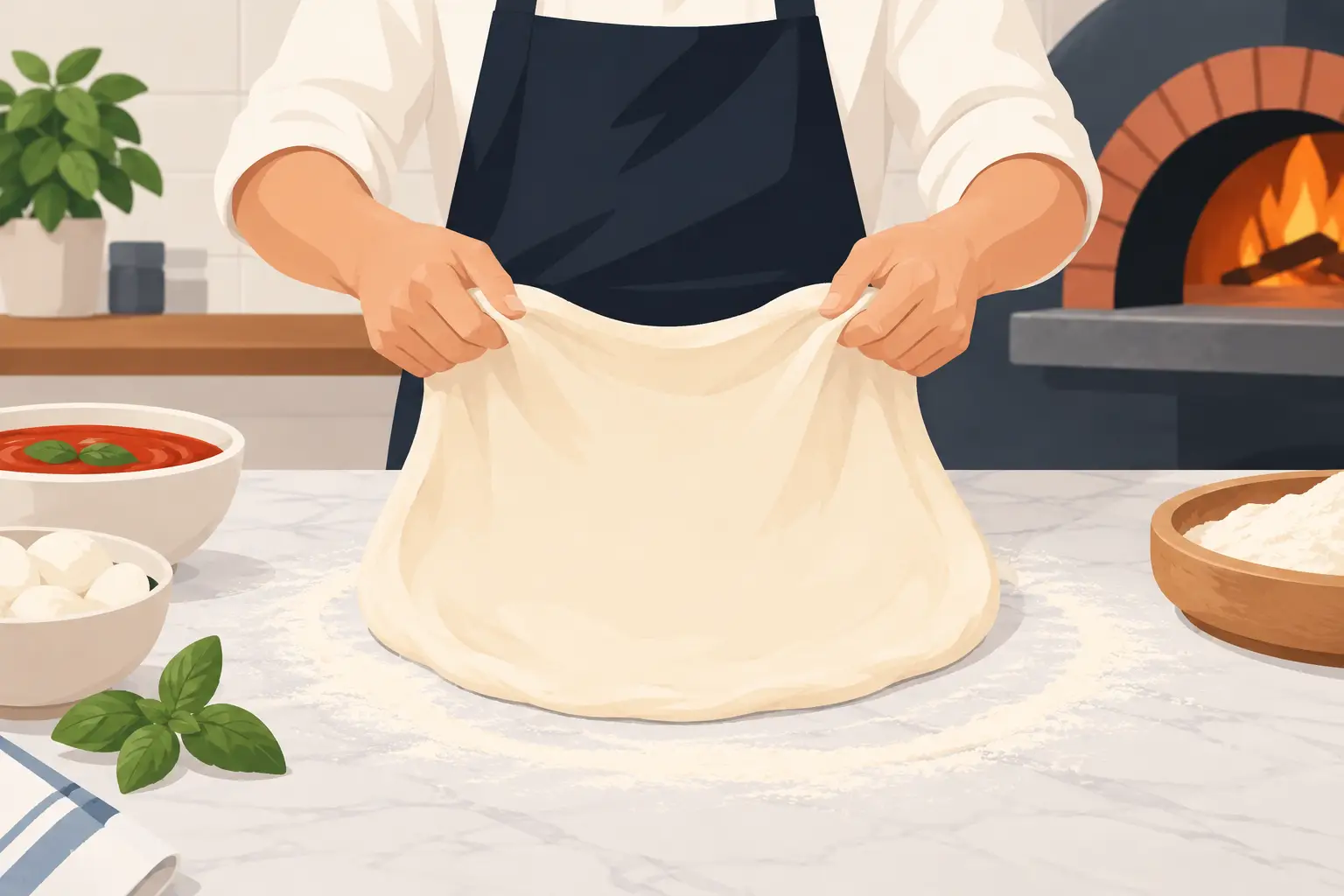
When the dough reaches roughly six to seven inches across, lift it with both hands. Let it rest across your knuckles or the backs of your hands rather than pulling it between your fingers. Rotate it slowly, allowing gravity to assist. The dough should stretch under its own weight while your hands provide support.
This is the moment where restraint matters. Pulling hard creates weak spots. Holding the dough in one place for too long can make an uneven, thin patch that tears under sauce or toppings. Keep it moving, rotate often, and stop when the center is thin enough to see a faint glow of light through it. For a classic individual Neapolitan pizza, aim for a round around 10 to 12 inches wide, with a defined, air-filled rim.
Why the Rim Needs to Stay Untouched
The cornicione is not added later. It is already inside the dough ball, in the tiny pockets of carbon dioxide formed during fermentation. Your job is to preserve them. Pressing the rim flat releases that trapped gas and makes the baked crust dense.
A well-handled rim expands dramatically in the heat of the oven. It should be crisp in spots, tender beneath the surface, and light enough that you want another bite before the first slice is finished. That contrast between the soft center, bright toppings, and airy edge is central to the Neapolitan experience.
Use Gravity, Not Force
There is a familiar image of pizza dough being tossed high in the air. It can be beautiful to watch, but it is not required for great results. In fact, for many home cooks, tossing creates more risk than reward. It can over-stretch the center, send flour across the kitchen, or turn a promising dough into a torn one.
Knuckle stretching is more controlled. Let the dough drape over both hands, gently turn it, and shift your hands outward as it opens. If one area remains thicker, support the dough and give that spot a little extra time over your knuckles. If one area starts to look too thin, move on immediately and allow the rest of the dough to catch up.
The dough may resist and pull back slightly. That is normal. Set it down for a minute or two, cover it lightly if your kitchen is dry, and let the gluten relax. Trying to overpower a tight dough almost always leads to tears. Patience is a technique.
Fix Common Problems Without Losing the Dough
A small tear does not have to end the pizza. Lay the dough on the bench, bring the edges of the hole gently together, and press the seam closed with a light touch. Keep that repaired area away from the wettest part of your toppings if possible. A tiny patch may bake just fine, especially in a very hot oven.
If the dough sticks, do not yank it free. Slide a little flour beneath the stuck area and loosen it gradually. If it keeps sticking, the bench may be damp, the dough may be overproofed, or the hydration may be too high for your current technique. Add only enough flour to regain control.
A dough that shrinks back is usually under-relaxed. Give it time instead of more pressure. A dough that spreads thin and slack may be overproofed, overly warm, or simply very high in hydration. In that case, handle it less, stretch it slightly smaller, and use toppings sparingly. The best response depends on what the dough is telling you.
Top Quickly and Respect the Center
Once the dough is stretched, move with purpose. The longer it sits on the bench or peel, the more likely it is to stick. A Neapolitan pizza needs a restrained hand with toppings anyway. Too much sauce, too much cheese, or heavy ingredients piled in the middle can weigh down the delicate center and prevent a clean bake.
Use a thin layer of tomato, leaving the rim bare. Add fresh mozzarella in balanced pieces rather than a wet mound. Then give the pizza a quick shake before it goes into the oven. If it does not move freely, lift one edge and dust beneath it before launching.
A hot oven rewards this balance. The center should stay tender rather than cracker-crisp, while the rim rises and chars in spots. That brief bake is the final test of the stretching work that came before it.
A Note on Gluten-Free Neapolitan Dough
Gluten-free dough does not behave like traditional wheat dough because it lacks the elastic gluten network that allows a classic ball to stretch over the hands. It is typically pressed or carefully patted into shape rather than opened with the same knuckle technique. That difference is not a compromise in care. It simply calls for a distinct method, along with dedicated preparation practices that protect guests with celiac-related needs from cross-contact.
The goal remains the same: a balanced pizza with a light edge, a tender base, and the full flavor of thoughtfully chosen ingredients. Every guest deserves that complete experience.
The next time you open a dough ball, slow down at the rim. Let the fermentation do the lifting, let gravity do some of the stretching, and let your hands protect the air. The pizza will carry the difference all the way to the table.