
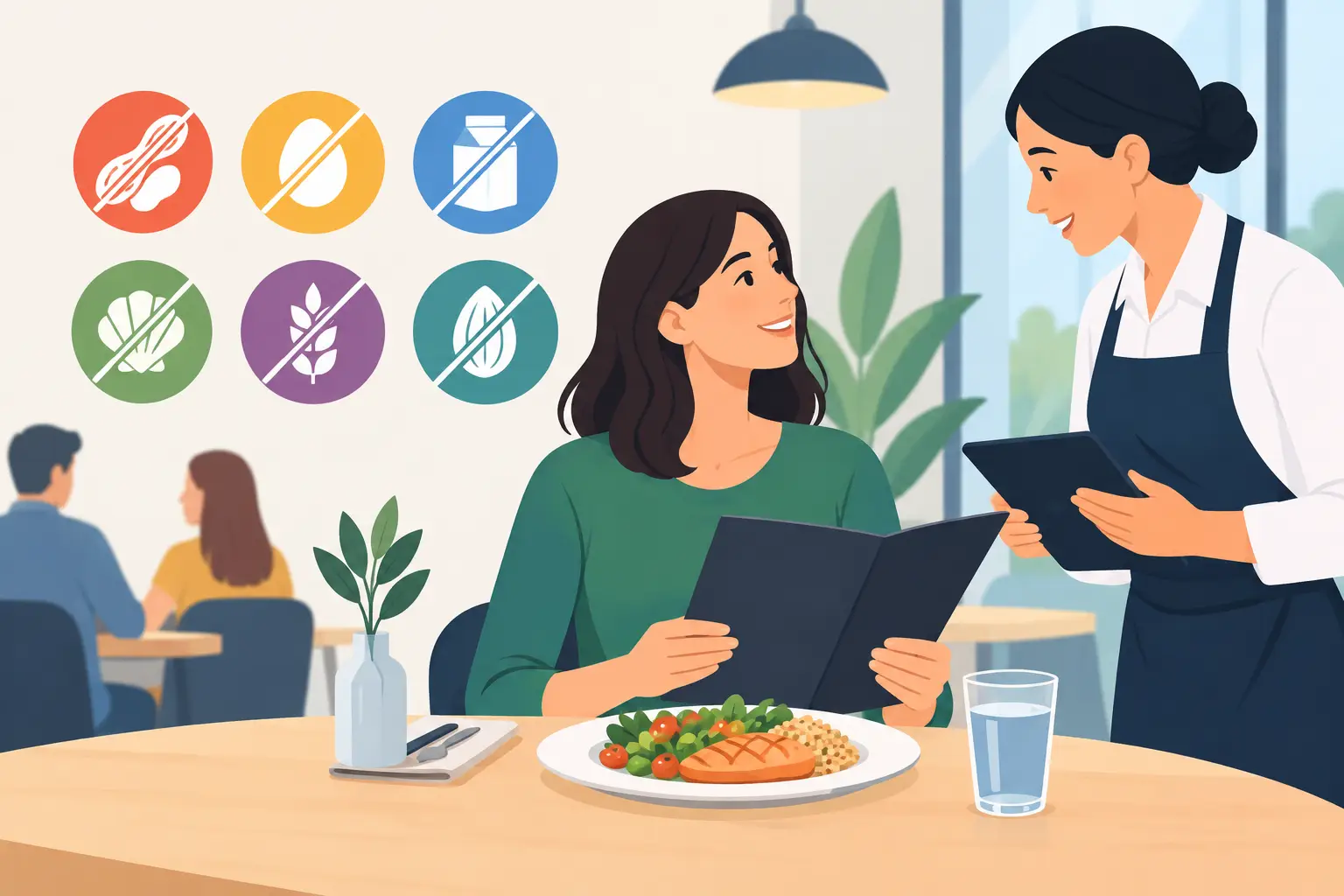
A memorable restaurant meal should begin with anticipation, not anxiety. This guide to food allergen dining is for guests who want the warmth of a shared table and the confidence to make informed choices – whether they are managing a severe food allergy, celiac disease, a medical dietary restriction, or dining with someone who is.
Great hospitality does not mean promising that every dish works for every guest. It means listening carefully, speaking plainly about ingredients and preparation, and treating each question with the care it deserves. In an Italian kitchen, where flour, cheese, nuts, seafood, eggs, and sauces may all be part of the same menu, that clarity matters.
Food allergen dining begins before you arrive
The most useful conversation often happens before a reservation is made or an order is placed. Look at the menu, but do not rely on a dish name alone. A simple-looking pizza, pasta, salad, or dessert can include allergens in the dough, sauce, garnish, seasoning blend, cheese, or finishing oil.
When you contact a restaurant, state the allergen directly and explain the level of concern. “I avoid dairy” and “I have a milk allergy” require different responses. If cross-contact presents a risk, say so. If the concern is celiac disease, specify that gluten exposure from shared flour, utensils, ovens, work surfaces, or frying oil may be relevant.
This is not being difficult. It gives the restaurant the information needed to answer honestly. A knowledgeable team may be able to describe the ingredients in a dish, identify modifications that are possible, and explain where the kitchen’s limits begin. If the answer is uncertain, that is useful information too. The right choice may be a different dish, a different preparation, or, in some circumstances, another restaurant.
Ask about the process, not only the ingredient
The question “Does this contain gluten?” is essential, but it is only the first question for a guest with celiac disease or a wheat allergy. Ask how the item is prepared. Is it made on a separate surface? Are dedicated tools, pans, and storage containers used? Is the fryer shared? Is flour handled nearby? Can staff prevent contact during service?
The same principle applies to other allergens. A menu may offer a nut-free dessert recipe, for example, yet it may be plated beside pastries containing nuts. A shellfish-free sauce may be cooked in a pan used for shellfish. A dairy-free option can still be affected by shared ladles, cutting boards, or cheese-covered prep areas.
Good answers are specific. “We can take care of it” is reassuring, but “we prepare that item in a dedicated area with separate equipment” tells you far more. Precision is a sign of respect.
Read menus with an ingredient mindset
Italian food is rooted in beautiful, direct ingredients, but direct does not always mean simple from an allergen perspective. Pizza dough traditionally contains wheat. Mozzarella and other cheeses contain milk. Egg may appear in fresh pasta, desserts, and certain preparations. Pesto may contain nuts, while seafood, cured meats, and sauces each bring their own considerations.
A menu icon can be helpful, but it should begin the conversation rather than end it. Recipes change, suppliers change, and seasonal specials may be prepared differently from regular menu items. Ask about the current dish, especially if you are ordering a special or making substitutions.
Be cautious with broad phrases such as “gluten-friendly” or “made without nuts.” They can describe a recipe, but they do not necessarily describe a controlled preparation environment. For some guests, that distinction is manageable. For others, it is decisive.
Gluten-free and allergen-safe are not interchangeable
This distinction deserves care. Gluten-free means a food is intended to exclude gluten. It does not automatically mean it is free from dairy, eggs, soy, nuts, sesame, or other allergens. Likewise, a dish without a particular allergen is not automatically safe from cross-contact.
At a pizza restaurant, gluten-free preparation requires exceptional discipline because wheat flour is central to the traditional craft. A truly thoughtful program considers more than the recipe: it considers where the dough is stored, how it is stretched, which tools touch it, how it is baked, and how it is finished and boxed.
Kesté approaches gluten-free Neapolitan pizza through a separate certified production environment, so guests seeking a complete pizza experience can ask informed questions about the procedures behind the pie. Still, every guest should communicate their individual needs directly, particularly when multiple allergies are involved.
At the table, make the allergy visible and clear
Once you arrive, tell your server again. This is not redundant. Reservations, host notes, floor staff, and kitchen tickets are separate points in a busy service. A brief, calm reminder ensures the information travels with your order.
Use plain language: “I have a severe sesame allergy. Can you confirm whether this dish contains sesame or may come into contact with it?” If you are sharing food, mention that too. A server may be able to recommend which dishes are easiest to keep separate, or whether sharing creates a meaningful risk.
If your order arrives with an unexpected garnish, sauce, or side, pause before tasting it. Ask. Restaurants want to correct mistakes, and a quick check can prevent a stressful situation. This is especially true with finishing ingredients, which are often added after a dish leaves the main cooking station.
For guests carrying epinephrine, keep it with you rather than in a coatroom, bag across the room, or car. Dining companions should know where it is and what to do in an emergency. Restaurant preparation can reduce risk, but personal emergency planning remains essential.
Choose restaurants that welcome detailed questions
The best signal is not a menu packed with vague promises. It is a restaurant whose team can explain its practices without irritation or guesswork. Look for signs of care: clear allergen information, staff who ask follow-up questions, managers who are available when needed, and procedures that match the seriousness of the request.
There is a trade-off worth acknowledging. A small, focused menu may be easier for a kitchen to manage than a large menu with endless modifications. A dedicated allergen-free facility may provide a different level of assurance than a traditional restaurant that offers allergen-aware options. Neither is automatically better for every diner. Your medical needs, the allergen involved, and the restaurant’s actual process should guide the decision.
For groups, plan ahead. A birthday dinner, work lunch, or family meal is easier when the organizer tells the restaurant about allergies in advance and avoids making the affected guest negotiate everything at the table. Inclusion is not asking one person to settle for a side salad while everyone else celebrates. It is choosing a place where the group can enjoy the meal together with care.
A short script that makes conversations easier
If you are unsure how to begin, try this: “I have a medically necessary allergy to [allergen]. I need to know whether this dish contains it and whether you can prepare it to avoid cross-contact. If not, I understand – what would you recommend?”
That final sentence matters. It invites an honest answer rather than pressuring staff to make an unsafe promise. It also opens the door to better recommendations. Sometimes the safest, most satisfying choice is not the dish you first had in mind.
Food is heritage, craft, comfort, and celebration. With clear communication and a restaurant team that values ingredient integrity, food allergen dining can leave room for what a shared meal is meant to hold: conversation, pleasure, and the simple joy of being welcomed at the table.