
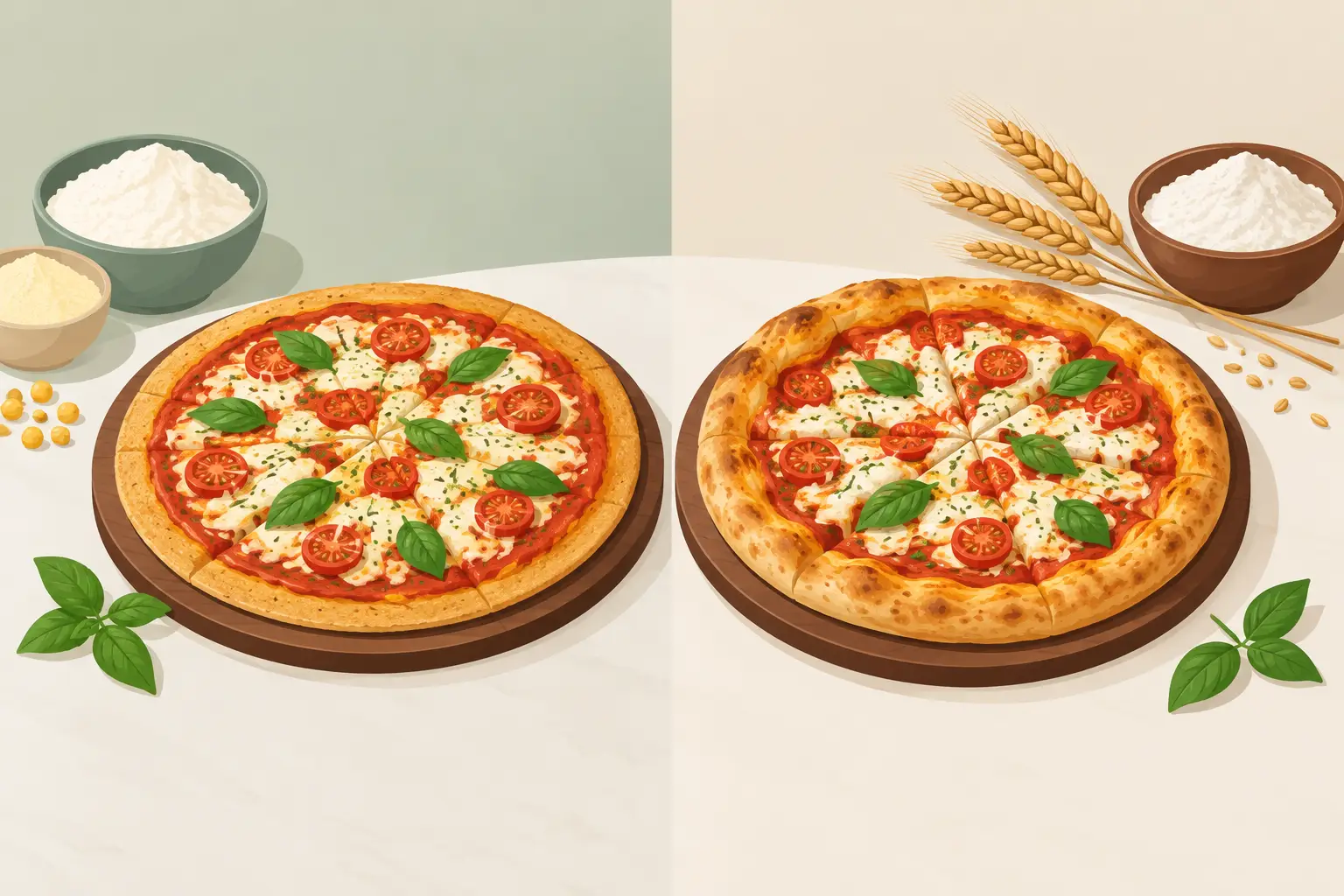
A great pizza is not defined by whether it contains gluten. It is defined by the care behind the dough, the heat of the oven, the quality of the tomatoes and cheese, and the moment when a soft, blistered crust reaches the table. Still, gluten free versus regular pizza is a meaningful distinction, especially for diners with celiac disease or gluten sensitivity. The flour changes. The handling must change. And when safety matters, the kitchen itself must change.
For guests who can eat either, the choice may come down to personal preference. For those who cannot eat gluten, the choice is not casual at all. They deserve the same generous, true-to-Naples pizza experience as everyone else – not a dry substitute served as an afterthought.
Gluten Free Versus Regular Pizza Starts With the Dough
Traditional Neapolitan pizza dough is remarkably simple: flour, water, salt, and yeast. Yet its character comes from disciplined technique. A long natural fermentation develops flavor, helps create a light interior, and gives the rim its distinctive rise in a blazing-hot oven.
In regular pizza dough, gluten forms when wheat flour is hydrated and worked. This protein network gives the dough stretch, strength, and the ability to hold the gases created during fermentation. It is why an experienced pizzaiolo can gently open a dough ball by hand, leaving a pillowy cornicione around the edge while keeping the center thin enough to bake quickly.
Gluten-free dough cannot rely on that elastic structure. It needs a carefully built blend of gluten-free flours and starches, along with ingredients that provide binding, moisture retention, and lift. The goal is not to imitate wheat dough with a single ingredient. It is to create a different dough system that can still produce an airy bite, a crisp base, and a crust with real flavor.
That difference explains why gluten-free pizza requires its own expertise. A dough that is too dry can turn sandy or hard. One that holds too much moisture can bake pale or become dense in the center. The work is in finding balance: enough structure to support sauce and cheese, enough tenderness to feel satisfying, and enough heat to bring color and character to the crust.
Texture Is Different, but It Should Still Be Delicious
Regular Neapolitan pizza has a particular texture: soft in the center, tender beneath the toppings, and charred in spots along the rim. The chew comes from gluten, but great pizza is never only about chew. It is also about fermentation, hydration, heat, and restraint.
A well-made gluten-free pizza will not behave exactly like a wheat-based dough, and pretending otherwise does diners no favors. The texture may be slightly more delicate, and the crust may have a cleaner, crisper bite rather than the same elastic pull. But it should still feel complete. It should fold without falling apart, carry its toppings confidently, and taste like pizza first.
The toppings matter here. Bright tomato, fresh mozzarella, extra-virgin olive oil, basil, cured meats, mushrooms, and vegetables all bring their own moisture, salt, and richness. A skilled kitchen considers how each ingredient will bake on a gluten-free base. Too many wet toppings can overwhelm any crust. Thoughtful proportion is part of the craft, whether the dough contains gluten or not.
Fermentation Still Makes a Difference
Some people assume gluten-free dough has no connection to the patient fermentation associated with artisanal pizza. That is not the case. While fermentation cannot create gluten where there is none, it can still build aroma and depth.
Time allows yeast to develop subtle flavors that a rushed dough cannot offer. It can soften the raw taste of flour and make the crust more complex. In regular dough, fermentation also affects extensibility and digestibility for some diners. In gluten-free dough, it remains a valuable part of achieving a pizza that tastes considered rather than merely convenient.
Safety Is the Biggest Difference for Celiac Guests
For a diner with celiac disease, the question is not simply whether a crust is labeled gluten-free. The question is how it was prepared.
Flour can travel through the air. A shared work surface, pizza peel, cutter, storage container, oven tool, or handful of cheese can introduce gluten into a pizza that began with gluten-free ingredients. Small traces that may not concern a guest avoiding gluten by preference can be serious for someone who must strictly avoid it.
That is why a dedicated gluten-free process matters. It means more than keeping a separate dough ball in the refrigerator. It requires intentional separation in preparation, tools, surfaces, storage, and cooking procedures. It requires training and consistency from the entire team, not just good intentions during a busy dinner service.
At Kesté, gluten-free pizza is prepared in a separate certified environment designed to prevent cross-contact, so guests can order with greater confidence. That level of care is especially valuable for mixed groups. One person can enjoy a classic wheat-based pizza while another can enjoy a gluten-free pie prepared with the seriousness their dietary needs require.
If you have celiac disease or a severe gluten sensitivity, it is always wise to communicate your needs clearly when ordering. Ask whether the kitchen uses separate preparation areas and equipment, and whether the staff can explain its process. A thoughtful restaurant will welcome the question.
Is Gluten-Free Pizza Healthier Than Regular Pizza?
Not automatically. Gluten-free and regular pizza can both be part of an enjoyable meal, and neither label tells the full nutritional story.
Gluten-free crust is essential for people who need to avoid gluten, but it is not inherently lower in calories, carbohydrates, sodium, or fat. Depending on the recipe, a gluten-free dough may contain rice flour, potato starch, tapioca starch, or other ingredients that affect nutrition differently from wheat flour. Regular pizza, meanwhile, can be a balanced choice when made with quality ingredients and enjoyed in portions that suit your needs.
For many guests, the better question is: what does my body need, and what kind of pizza experience am I looking for? If you have been diagnosed with celiac disease, strict gluten avoidance is medically necessary. If you do not need to avoid gluten, a naturally fermented wheat dough may be the flavor and texture you prefer. Neither answer is a judgment. Pizza should make room for both.
What to Look for in Either Pizza
Whether you order gluten-free or regular, the signs of a carefully made pizza are similar. The dough should have flavor rather than tasting like a blank platform for cheese. The sauce should be bright and balanced. The cheese should melt without burying every other ingredient. And the crust should show the confidence of a kitchen that understands heat.
For regular pizza, look for a dough given time to ferment and handled gently. For gluten-free pizza, look for a restaurant that treats the recipe and the safety process as equally important. A beautiful crust means little if a guest cannot eat it with peace of mind.
The best choice is the one that lets everyone at the table share the occasion fully. When gluten-free pizza is made with precision, respect, and the same love given to traditional dough, it is not a compromise. It is a seat at the table, served hot.