
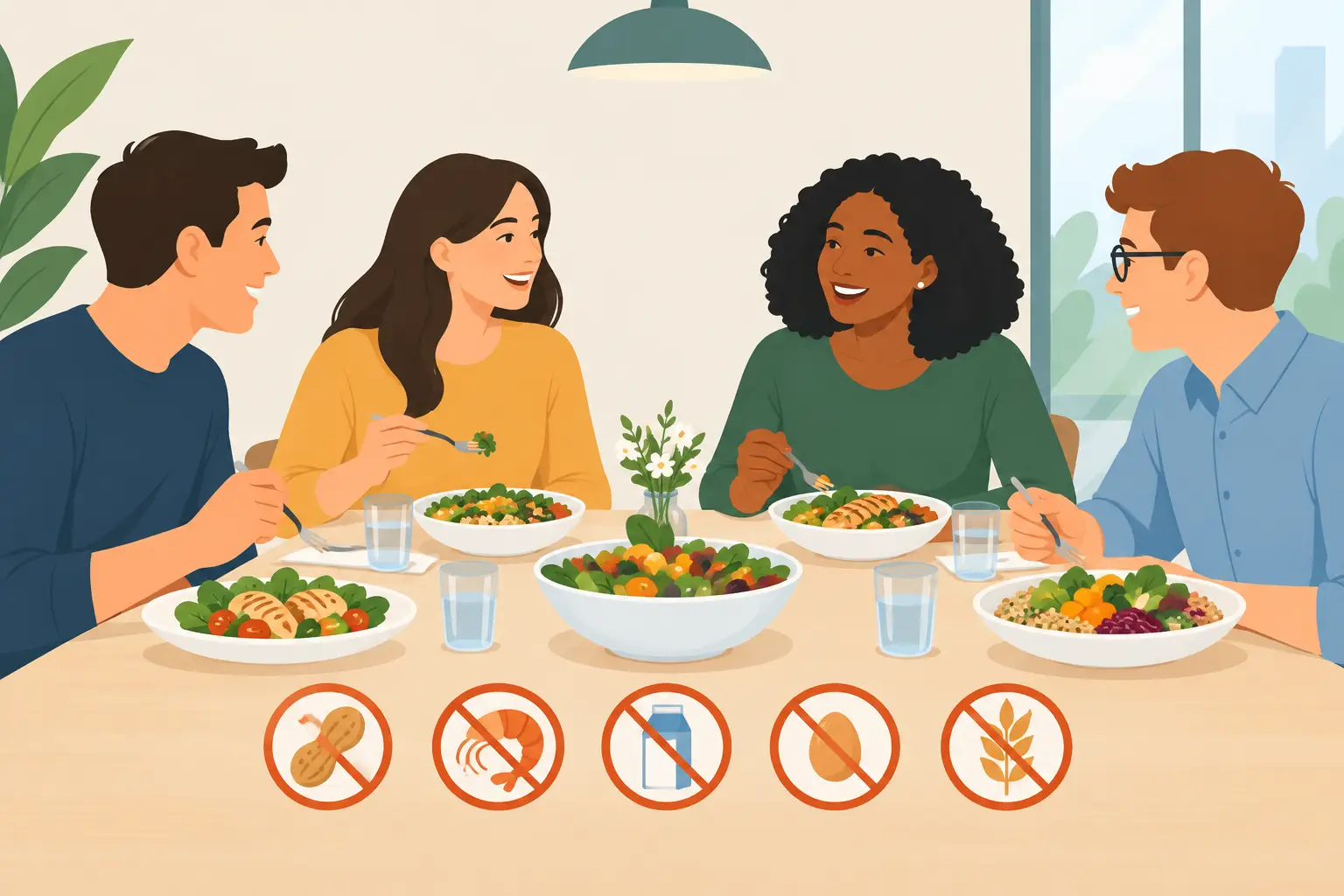
A great meal begins before the first plate reaches the table. For guests managing allergies, food allergy dining is not simply about finding something that appears safe on a menu. It is about knowing whether a restaurant understands the ingredient, the preparation, the tools, the hands, and the communication required to serve it responsibly.
That standard should not make dining out feel small or restrictive. A thoughtful restaurant makes room for the whole table: the guest with an allergy, the friend ordering pizza, the family sharing appetizers, and the host who wants everyone to relax. The goal is not a separate experience. It is a delicious, informed one.
What Food Allergy Dining Requires From a Restaurant
An allergen-friendly menu is useful, but it is only the beginning. Menus change, suppliers change, recipes change, and a dish that does not list an allergen may still be prepared beside it. The meaningful question is not only, “Does this dish contain it?” It is also, “How is this dish made?”
For a restaurant, that means clear ingredient knowledge and a kitchen culture that treats allergy communication with care. Front-of-house staff need to know when to involve a manager or chef rather than guess. Cooks need to understand which ingredients, utensils, work surfaces, fryers, ovens, and storage areas can create cross-contact. Most of all, the team must be comfortable saying when it cannot safely meet a request.
That honesty matters. No guest benefits from a vague assurance. A restaurant that takes a few extra minutes to verify an ingredient or explain a limitation is showing the kind of respect food allergy dining deserves.
Allergy, Intolerance, Celiac Disease, and Preference Are Different Needs
Restaurants often receive requests for gluten-free, dairy-free, nut-free, vegan, and many other dietary needs in the same service. These requests can overlap, but they are not interchangeable. A food allergy may involve a serious immune response. Celiac disease requires rigorous avoidance of gluten and cross-contact. An intolerance may have a different threshold and consequence. A preference is still worth honoring, but it may not require the same safety protocol.
Guests help the kitchen when they state their needs plainly. Saying, “I have a severe dairy allergy,” or “I have celiac disease and need gluten-free food prepared to avoid cross-contact,” gives the restaurant useful information. It is more precise than simply asking whether something is gluten-free or dairy-free.
How to Plan a Safer Meal Before You Arrive
The best time to start the conversation is before a busy dining room and a full order rail make communication harder. When making a reservation, ordering takeout, or planning a group meal, share the allergy early. Ask whether the restaurant can accommodate it, not whether it has one item that might work.
A few direct questions can make the answer much clearer:
- Is the allergen used in the kitchen, and if so, where?
- Can the team prevent cross-contact during preparation and cooking?
- Are ingredient lists and recipes available for the specific dish?
- Should the request be noted on the reservation or order before arrival?
These are not difficult questions, and a prepared restaurant will not treat them as an inconvenience. Still, the answer may depend on the allergy and the service. A kitchen may have a dependable procedure for gluten-free preparation but be unable to guarantee a nut-free environment if nuts are used throughout the facility. Another may be able to modify a dish during a quiet lunch but not safely alter a complex preparation during peak service.
If the response is uncertain, keep asking until you understand the process. If the answer remains unclear, choose another restaurant. This is not about demanding perfection from every kitchen. It is about choosing one whose practices match your specific risk.
At the Table, Make the Conversation Specific
Once seated, mention the allergy again to your server, even if it was included in a reservation note. A well-run restaurant welcomes that confirmation. Ask for the allergy to be marked on the ticket and, if needed, ask whether a manager or chef can verify the dish.
Specificity is especially valuable with dishes that seem simple. A grilled vegetable may share a grill with marinated proteins. A salad may include an unlisted garnish or use a dressing containing dairy, sesame, or anchovy. A fried item may be cooked in oil used for breaded foods or shellfish. Pizza, in particular, involves flour in the air, shared benches, toppings handled in rapid succession, and high-volume ovens. A gluten-free crust is meaningful only when the full preparation process supports it.
Ask about the complete dish: the dough or base, sauce, cheese, toppings, finishing oils, garnishes, and cooking method. If a modification is needed, confirm what will replace the removed ingredient. A dish without cheese, for example, may still be brushed with butter or finished with a dairy-based sauce.
There is a balance here. Guests should feel welcome to ask informed questions, while recognizing that no restaurant should make promises it cannot keep. The clearest communication creates the best outcome for everyone.
Why Separate Preparation Changes the Experience
Some dietary needs can be accommodated through careful cleaning and controlled handling. Others call for a more dedicated system. Separate storage, labeled tools, designated prep surfaces, fresh gloves, distinct utensils, and trained staff all reduce opportunities for cross-contact. A separate production environment goes further by creating distance from the ingredients that pose a risk.
For gluten-free diners, that distinction can mean the difference between being offered a substitute and being invited into the full experience. Kesté’s dedicated certified gluten-free preparation program is built around that principle: guests should be able to enjoy a true Neapolitan-style pizza with careful anti-cross-contamination procedures, not settle for an afterthought.
This level of care has a trade-off. Dedicated preparation takes training, space, time, and disciplined coordination. It may mean a more limited menu, longer preparation time, or a need to order ahead. Those limits are not signs of poor hospitality. Often, they are evidence that the restaurant has designed its process around safety rather than making casual promises.
Ingredient Integrity Is Part of the Answer
A careful kitchen starts with knowing what it buys. Imported cheeses, cured meats, sauces, flour, spice blends, and prepared products can all contain allergens or carry changing formulations. Reliable sourcing and current ingredient records help chefs answer questions accurately instead of relying on memory.
That is especially relevant in Italian cooking, where a short ingredient list does not always mean a simple allergen profile. Milk appears in many cheeses and creams. Wheat is central to traditional dough. Nuts may be used in pesto or desserts. Egg can appear in pasta, desserts, and certain sauces. A restaurant rooted in tradition should never use authenticity as a reason to be vague. Craft includes transparency.
Make Space for the Whole Group
Food allergies can make group dining feel complicated, particularly when a birthday, work dinner, or family visit is centered on sharing food. The best hosts plan with the allergy-conscious guest in mind from the beginning rather than asking them to manage the issue after everyone has arrived.
Choose a restaurant that can explain its procedures before the reservation is confirmed. Share the allergy with the organizer and restaurant in advance. Avoid treating the guest’s needs as a last-minute exception. When the plan is clear, the table can focus on the reasons people gathered in the first place: conversation, celebration, and a meal made with care.
If the restaurant cannot accommodate an allergy safely, a gracious answer is still useful. Thank the team for being direct, then keep looking. The right dining room will not make a guest feel difficult for asking how their food is handled.
The most memorable meals are built on trust. Ask the questions, listen closely to the answers, and choose restaurants that treat every guest’s place at the table as part of their craft.