
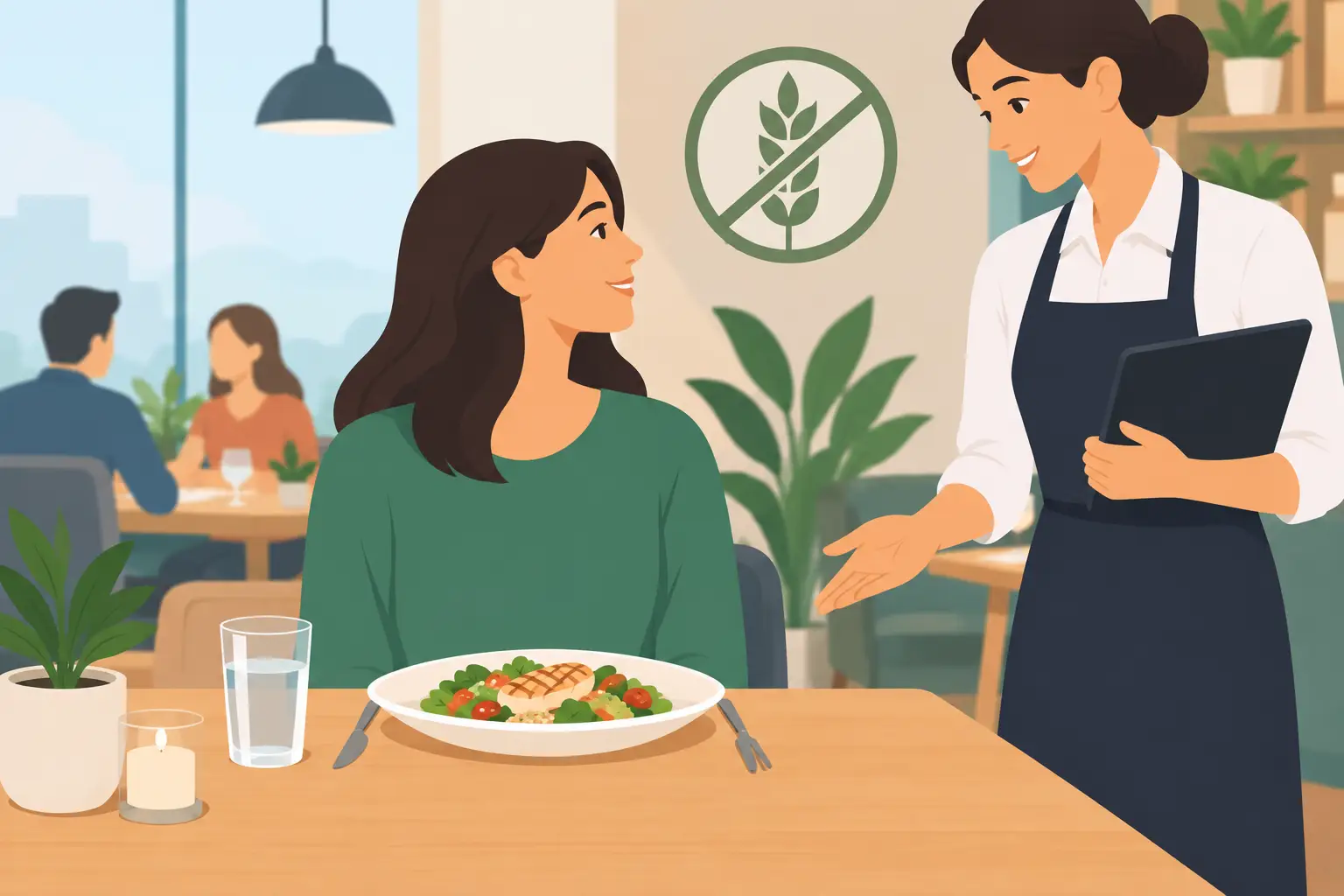
A beautiful plate is not enough when you have celiac disease. The real standard is what happens before the plate reaches the table: how ingredients are sourced, where food is prepared, which tools are used, and whether the team understands that a crumb can matter. This celiac safe restaurant guide is designed to help you dine out with more clarity, ask better questions, and recognize the difference between a gluten-free option and a truly considered gluten-free experience.
Dining with celiac disease should not require settling for an afterthought. A restaurant meal can still be generous, celebratory, and full of authentic flavor – provided the kitchen has systems worthy of your trust.
Start With the Restaurant’s Process
Many menus now identify gluten-free dishes. That is useful, but it is only the first question. A dish can be made without wheat-based ingredients and still be unsafe because of shared flour, fryers, cutting boards, utensils, or preparation surfaces.
Before making a reservation or placing an order, look for specificity. Strong restaurants explain how they handle gluten-free food rather than relying on a broad claim. They can tell you whether there is a separate preparation area, dedicated equipment, distinct storage, and staff training. If the answer is vague – “we can probably make that work” – treat it as a signal to ask more.
A reliable process is not about perfection in the abstract. It is about repeatable habits: clear communication from guest to server to kitchen, separate handling when required, and a team that knows why those steps exist.
Ask Questions That Reveal Real Safety Standards
You do not need to interrogate every restaurant. A few direct questions will reveal a great deal about its practices. Let the restaurant know that you have celiac disease, not simply a preference for gluten-free food. This frames the conversation around medical cross-contact precautions.
Ask whether gluten-free dishes are prepared in a dedicated area and whether the kitchen uses separate tools, pans, and utensils. For fried food, ask if there is a dedicated gluten-free fryer. A shared fryer can transfer gluten to naturally gluten-free ingredients such as potatoes, vegetables, or seafood.
For pizza, bread, and baked dishes, the questions become even more specific. Flour travels easily through a kitchen, especially during service. Ask where gluten-free dough is made and stretched, whether it is handled with separate equipment, and how it is baked. A gluten-free crust placed on the same flour-dusted surface, cut with the same wheel, or finished with the same utensils as wheat pizza may not meet the needs of a guest with celiac disease.
The best answer is clear, calm, and detailed. It should never make you feel inconvenient for asking.
Know the Difference Between Ingredients and Cross-Contact
An ingredient check answers one question: Does this recipe contain gluten? Cross-contact answers another: Could gluten have entered the dish during storage, preparation, cooking, or plating?
A salad, for example, may begin with naturally gluten-free greens, vegetables, and olive oil. But croutons removed after the fact, a shared prep board, a dressing with an unverified ingredient, or tongs used for bread service can change the outcome. The same principle applies to sauces, marinades, spice blends, grated cheese, and dessert garnishes.
This is why confidence should come from a restaurant’s full system, not from one label beside a menu item.
Read the Menu With a Kitchen in Mind
A thoughtful menu often offers helpful clues. Look for dishes that are clearly identified, ingredient-forward, and supported by staff who can explain modifications. Be cautious with items that depend on hidden components: sauces, breading, prepared stocks, cured meats, soy-based seasonings, or desserts made elsewhere.
It also helps to consider the restaurant’s core cuisine. A kitchen built around pasta, bread, and pizza may be able to serve gluten-free guests exceptionally well, but only if it has made a serious investment in separation and training. On the other hand, a menu with many naturally gluten-free choices is not automatically safer if the kitchen uses shared equipment without safeguards.
Italian food deserves particular care here. Risotto, polenta, grilled fish, vegetables, and many sauces can be naturally gluten-free, while pasta, breadcrumbs, flour-thickened preparations, and certain desserts require close attention. Authenticity and safety are not opposing goals. The strongest restaurants honor both through disciplined technique and transparent sourcing.
The Celiac Safe Restaurant Guide to Pizza
Pizza is one of the most rewarding – and most demanding – meals for a gluten-free diner. Traditional pizza kitchens work with flour constantly. It settles on counters, peels, aprons, oven tools, and the air around the make line. A gluten-free pizza is therefore only as dependable as the precautions behind it.
When choosing pizza, ask whether the gluten-free dough is made and prepared in a separate certified environment, and whether the restaurant follows strict anti-cross-contamination procedures through baking, slicing, and serving. Find out whether gluten-free pizzas use dedicated pans or screens and separate cutters. If the restaurant cannot describe its protocol, a gluten-free crust alone is not enough reassurance.
At Kesté Pizzeria, the goal is not to offer a substitute that feels like a compromise. The gluten-free program is built around a dedicated certified environment and rigorous anti-cross-contamination standards, so guests with celiac-related needs can enjoy a complete Neapolitan pizza experience. That commitment matters because texture, fermentation, imported ingredients, and safety should be able to share the same table.
Plan Ahead Without Losing the Joy of Dining Out
Calling ahead is often the simplest way to make a meal more relaxed. Choose a less hectic service time when possible, especially for a first visit. A restaurant may be better able to discuss procedures, confirm ingredient details, and coordinate with the kitchen before a busy rush.
When you arrive, repeat the celiac note to your server even if you included it in a reservation. This is not redundancy for its own sake. It creates a clear handoff and gives the server an opportunity to flag any changes in ingredients or availability.
For delivery and takeout, be just as precise. Add a concise note stating that the order is for a guest with celiac disease and requires gluten-free handling. Then call if the restaurant recommends it or if the item needs special preparation. Packaging can also matter: a gluten-free pizza or entrée should be kept distinct from wheat-based items during packing and transport.
Travelers and group diners may need a little more planning. In a mixed group, select a restaurant that can serve every guest with care rather than asking one person to accept the least interesting option. A good meal is communal, and the person with celiac disease deserves more than a side salad while everyone else shares the table’s signature dishes.
Trust Your Questions, Then Trust Your Experience
There is no single script that guarantees a safe meal at every restaurant. Your needs, your level of sensitivity, the kitchen’s setup, and the food you choose all matter. But you should expect respect, informed answers, and procedures that match the seriousness of the request.
If a staff member seems unsure, it is reasonable to choose something simpler, ask to speak with a manager, or dine elsewhere. That is not being difficult. It is making an informed decision about your health.
The restaurants worth returning to make this process feel natural. They understand that hospitality is not only a warm welcome at the door. It is the discipline behind the scenes that lets every guest sit down, share a meal, and savor it with confidence.