
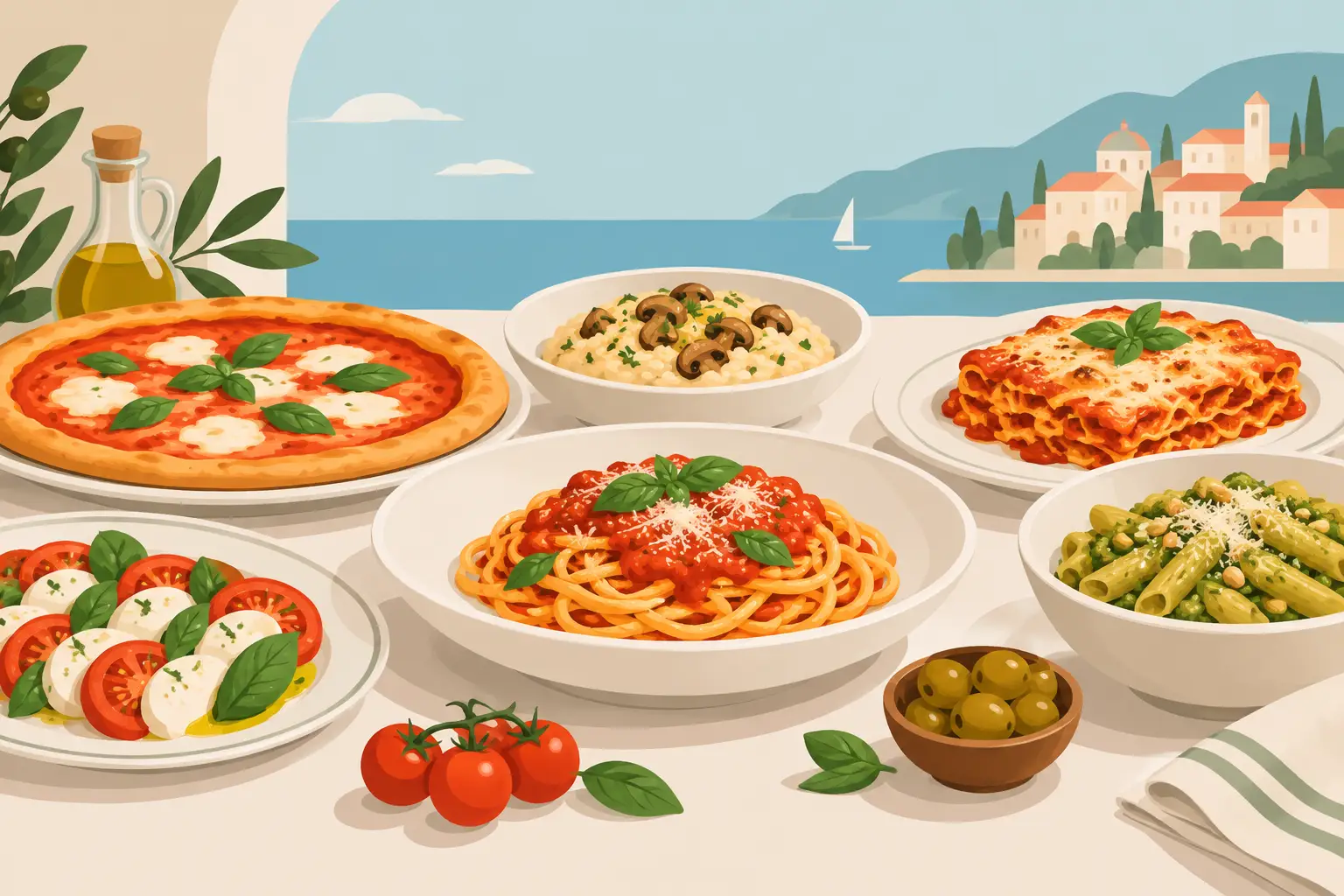
A great Italian meal should never make a gluten-free guest feel like an afterthought. The best gluten free Italian dishes are not merely substitutions. They are recipes with deep regional roots, carefully chosen ingredients, and, when flour is involved, the disciplined preparation needed to protect both flavor and safety.
Italian cooking offers far more naturally gluten-free possibilities than many diners expect. Tomatoes, olive oil, vegetables, seafood, meat, cheese, rice, polenta, and legumes have always had a place at the Italian table. The question is not whether Italian food can be gluten-free. The question is whether the kitchen understands the difference between a naturally gluten-free dish and one that requires serious cross-contact controls.
What Makes Italian Food Truly Gluten-Free?
A plate of grilled fish with lemon, olive oil, and herbs may be naturally gluten-free. A risotto made with rice, stock, Parmigiano Reggiano, and saffron can be as well. Yet the same dishes can become unsafe if the stock contains gluten, the pan was dusted with flour, or a shared utensil carries residue from pasta or bread.
For guests with celiac disease, “gluten-friendly” is not enough. Ask how a dish is prepared, not only what it is called. This matters most with fried foods, sauces, cured meats, meatballs, pasta, and pizza, where flour and shared equipment can quietly enter the process.
The reward for that care is substantial: a full Italian meal, with the same generosity, texture, and pleasure everyone at the table deserves.
The Best Gluten Free Italian Dishes, From Antipasti to Dolce
1. Caprese Salad
Few dishes make a stronger case for restraint than insalata Caprese. Ripe tomatoes, fresh mozzarella, basil, extra-virgin olive oil, and salt need no wheat to feel complete. Its quality comes down to seasonality and sourcing. Sweet tomatoes, creamy mozzarella, and fragrant basil do the work.
Confirm that the balsamic glaze, if used, is gluten-free and that no bread has been plated alongside it. Simple food deserves precise handling.
2. Prosciutto, Cheese, and Marinated Vegetables
An antipasto plate can be an excellent gluten-free beginning when it focuses on Italian cured meats, aged cheeses, olives, roasted peppers, artichokes, and seasonal vegetables. Prosciutto di Parma, mortadella, and salumi are often naturally gluten-free, but recipes and slicing practices vary.
Skip the bread basket, of course, but do not settle for an empty plate. A well-built antipasto should be abundant enough to share and varied enough to open the appetite.
3. Arancini Made With Gluten-Free Care
Sicilian arancini are crisp rice croquettes, often filled with ragù, cheese, peas, or mushrooms. Rice is naturally gluten-free, but traditional arancini are usually breaded and fried, which means this dish is only appropriate when a restaurant specifically makes a gluten-free version in protected oil and with gluten-free crumbs.
When that standard is met, arancini offer one of Italian cooking’s great contrasts: a crackling exterior around warm, tender rice. When it is not, choose another starter rather than taking a chance.
4. Risotto
Risotto is one of the most dependable answers for gluten-free Italian dining. Arborio, Carnaroli, and Vialone Nano rice create their own creaminess through slow cooking and stirring, not through flour or heavy cream.
Mushroom risotto, saffron risotto alla Milanese, seafood risotto, and spring vegetable risotto can all be exceptional choices. The details still matter. Ask about the stock, any added flavor bases, and whether the kitchen uses flour in finishing sauces. A properly made risotto should taste of the rice and its main ingredient first.
5. Polenta With Ragù, Mushrooms, or Cheese
Polenta is Northern Italian comfort food at its finest. Cornmeal cooked slowly with water or stock becomes soft and deeply satisfying, ready for braised meats, wild mushrooms, tomato ragù, or a finish of butter and cheese.
It is naturally gluten-free, though restaurant preparation deserves the same questions as risotto. Polenta may be cooled, cut, and grilled or fried, so shared grill surfaces and fryers can change the answer.
6. Grilled Branzino or Seafood
Italian coastal cooking is a gift to gluten-free diners. Whole grilled branzino, calamari prepared without breading, shrimp with garlic and olive oil, or a simple seafood stew can deliver enormous flavor without relying on wheat.
Order sauces thoughtfully. Flour can be used to thicken a fish sauce, and fried calamari is commonly coated in wheat flour. Grilled, roasted, poached, or sautéed seafood is usually the clearer path, especially when finished simply with lemon, parsley, capers, and good olive oil.
7. Eggplant Parmigiana
Melanzane alla Parmigiana can be naturally suited to gluten-free dining, but only if prepared without wheat flour or standard breadcrumbs. The dish layers eggplant, tomato sauce, basil, mozzarella, and Parmigiano Reggiano into something rich, savory, and unmistakably Italian.
Some kitchens fry flour-dredged eggplant; others use breadcrumbs between layers. Ask before ordering. If the restaurant has a dedicated gluten-free preparation method, eggplant Parmigiana can be a generous main course that never feels like a compromise.
8. Gluten-Free Gnocchi
Potato gnocchi are not automatically gluten-free. Traditional recipes often include wheat flour to bind the dough, though gluten-free versions can be made with carefully selected alternatives. The best ones remain light and tender rather than dense or gummy.
A brown-butter sage sauce, fresh tomato sauce, pesto made without hidden additives, or a slow-cooked ragù can all complement gluten-free gnocchi beautifully. This is a dish where the kitchen’s technique matters as much as the ingredient list.
9. Pasta With a Gluten-Free Foundation
Italy’s pasta culture should be open to gluten-free diners, but a gluten-free noodle alone does not make a pasta dish safe. Boiling water, strainers, prep surfaces, pasta machines, and serving utensils all require separation from wheat pasta.
When a restaurant has a dedicated process, seek sauces that let the pasta and ingredients speak clearly: pomodoro, pesto, seafood, arrabbiata, or a long-simmered meat ragù. Avoid assuming that every cream sauce is safe. Flour may appear in a prepared base, and grated cheese stations can also create cross-contact concerns.
10. Gluten-Free Neapolitan Pizza
For many guests, pizza is the dish that determines whether an Italian restaurant feels genuinely inclusive. A worthy gluten-free Neapolitan pizza needs more than a different crust. It needs a dough developed for flavor, fermentation, stretch, and a tender bite, plus strict protection from airborne flour, shared benches, tools, ovens, and toppings.
That level of care is why dedicated gluten-free production matters. At Kesté Pizzeria, gluten-free pizzas are prepared in a separate certified environment, allowing diners to enjoy a complete Neapolitan experience with the confidence that safety and craft receive equal attention. A classic Margherita, pizza with vegetables, or a carefully sourced salumi pie can still carry the char, aroma, and balance that make pizza feel like Naples.
11. Beans, Greens, and Vegetable Sides
Do not overlook contorni. Sautéed broccoli rabe with garlic and chile, cannellini beans with rosemary, grilled zucchini, roasted potatoes, and spinach with olive oil often provide some of the meal’s most vivid flavors.
These dishes also make mixed-group dining easier. A table can share them alongside pizza, pasta, fish, or meat without making the gluten-free guest order a separate, lesser meal. Just verify that breadcrumbs have not been used as a finishing touch.
12. Panna Cotta or Flourless Chocolate Dessert
A memorable meal deserves a proper finish. Panna cotta, made with cream, sugar, and gelatin, is often a naturally gluten-free choice, especially with berries or fruit compote. Flourless chocolate cake can also be an excellent option, provided it is made and plated away from flour-based desserts.
Tiramisu, biscotti, and many cakes usually contain wheat, so ask rather than guess. A restaurant that treats dessert with the same care as the main course makes hospitality feel complete.
How to Order With Confidence
The most useful question is direct: “Can you prepare this safely for someone with celiac disease?” A knowledgeable restaurant should be able to explain the ingredients, the cooking surface, the fryer, and the measures used to prevent cross-contact. Vague reassurance is not the same as a process.
For a mixed table, choose restaurants that build gluten-free hospitality into their kitchen rather than treating it as a last-minute modification. That gives every guest more freedom to share antipasti, choose a satisfying main course, and linger over dessert without anxiety.
Italian food has always been about gathering around ingredients made with care. Choose the dishes and kitchens that extend that care all the way to the gluten-free guest, and the table becomes what it should be: generous, safe, and full of flavor.