
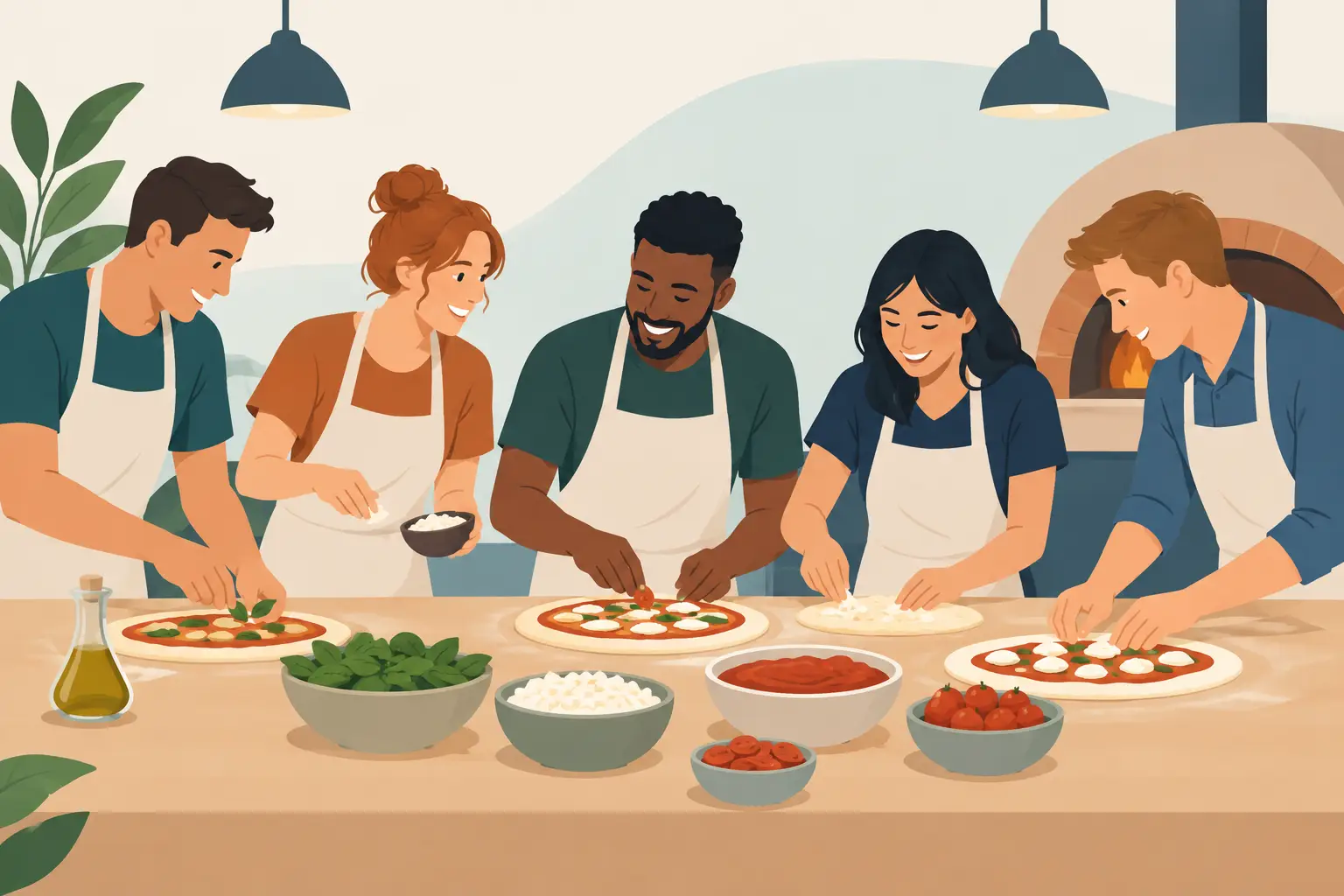
A group can share a meal almost anywhere. Pizza masterclass group activities give people something more lasting: flour on their hands, a better understanding of what makes a great pie, and the pleasure of sitting down to food they helped create. For teams, families, birthday parties, and friends gathering in New York, that difference turns an outing into a genuine shared memory.
Why Pizza Works So Well for Groups
Pizza begins with a simple act: bringing ingredients together. Water meets flour, dough becomes elastic through patience and technique, tomatoes are seasoned with restraint, and mozzarella is placed with intention. The process is approachable enough for a first-time guest, yet rich enough to hold the attention of serious food lovers.
That balance matters when a group includes different personalities. One person may care about the science of fermentation. Another may be interested in Italian ingredients. Someone else simply wants to stretch dough, laugh with coworkers, and eat a beautiful pizza while it is still hot. A well-led class makes room for all of them without reducing the experience to a novelty.
Neapolitan pizza is especially suited to this format because every step has a purpose. The soft, naturally fermented dough needs a light touch. The center needs enough sauce and cheese to be flavorful, but not so much that the pie becomes heavy. High heat transforms the rim in moments. Guests can see, feel, and taste the result of precision.
Pizza Masterclass Group Activities With a Purpose
The best group activities are not separate games added around the main event. They grow naturally from the craft itself. Instead of asking guests to compete for the sake of it, invite them to participate in the decisions that define a pizza.
Start with the dough story
Before anyone shapes a round, explain why dough deserves respect. Long natural fermentation develops flavor, structure, and digestibility. It also teaches a useful lesson for groups accustomed to moving quickly: some of the finest results cannot be rushed.
A skilled pizzaiolo can demonstrate the difference between pressing dough from the center outward and using a rolling pin. The point is not to make everyone perfect. It is to show why the airy cornicione, or outer crust, depends on preserving the dough’s living structure. Once guests try it themselves, they understand why a handmade pizza feels different from a factory-made crust.
Make ingredient choices part of the conversation
A masterclass becomes more memorable when guests learn to recognize ingredient integrity. San Marzano-style tomatoes, extra-virgin olive oil, fresh basil, and quality mozzarella each have a distinct role. This is not about piling on toppings. It is about balance, aroma, and the clarity of a few excellent ingredients.
For a corporate group, this moment can open a natural conversation about standards and collaboration. Every ingredient has to do its job. For a family celebration, it can be a chance for younger guests to taste and compare flavors they may not usually choose. The food provides the lesson without forcing one.
Shape, top, and bake together
Hands-on participation is where the room changes. Guests stop watching and start creating. Some dough rounds will be beautifully even. Some will be a little rustic. Both are part of the experience, and a good instructor knows how to help without taking over.
The bake is the reveal. In a properly heated pizza oven, a pie changes quickly: the crust lifts, the cheese melts, and the edges develop the characteristic spotted char that signals Neapolitan style. A group will naturally gather around that moment. It creates anticipation, then an immediate reward at the table.
Add a tasting ritual, not a lecture
Once pizzas arrive, slow the first few bites down. Notice the fragrance of basil, the tenderness beneath the crisp outer edge, and the brightness of tomato against creamy cheese. Guests do not need a formal tasting vocabulary. They only need permission to pay attention.
This also gives each participant a chance to appreciate the work behind the meal. Pizza is communal by nature, but it is never casual in its making. That distinction is what makes a masterclass feel elevated while remaining warm and welcoming.
How to Plan the Right Experience for Your Group
The strongest pizza class begins before the first ball of dough reaches the table. A host should consider the group’s size, occasion, schedule, and comfort level with hands-on cooking. A birthday group may want a lively, social pace. A client event may need time for conversation and a polished seated meal. A team gathering may benefit from more shared participation.
Be clear about the outcome you want. If the goal is team connection, arrange the experience so colleagues can work beside people they do not usually sit with. If the goal is a celebration, leave room for toasts, photos, and an unhurried meal. If the group includes devoted home cooks, ask for more detail on dough handling, oven heat, and ingredient selection.
Group size affects the rhythm. Smaller parties can receive more personal coaching and spend more time on technique. Larger groups benefit from a clear flow, stations, demonstrations, and a host who keeps the energy moving. Neither format is better. It depends on whether intimacy or scale is the priority.
Timing is equally important. Pizza rewards attention, but an event should not feel like a culinary exam. The best format alternates short demonstrations with practical moments, conversation, and eating. Guests stay engaged because they are never waiting too long or being asked to absorb too much at once.
Make Inclusion Part of the Menu
A thoughtful group host asks about dietary needs early. This is particularly important when gluten-free guests are part of the gathering. They deserve more than a side option or an apologetic substitute. They deserve a pizza experience with real texture, flavor, and care.
At Kesté, gluten-free Neapolitan pizza is prepared in a separate certified environment with strict procedures designed to prevent cross-contact. For a masterclass or private group, accommodations should be discussed in advance, since participation formats and production setups can vary. Transparency is the essential ingredient here. Do not promise what the kitchen cannot safely provide, and do not make guests explain their needs repeatedly at the table.
The same care applies to vegetarian preferences, dairy needs, and any other dietary consideration. When a host plans clearly, the group can focus on the pleasure of making and sharing pizza rather than navigating uncertainty.
What Guests Take Home Besides Pizza
The value of a pizza masterclass is not limited to the pie each person makes. Guests leave with a sharper eye for quality. They understand why fermentation takes time, why a light hand matters, and why ingredient sourcing changes the final flavor.
They also leave with a story they experienced together. A colleague who was quiet at the beginning may become the person everyone remembers for creating the most dramatic cornicione. A parent and adult child may discover a new ritual to repeat at home. Visitors to New York may carry away a more intimate connection to Naples than a standard restaurant meal could offer.
That is the real appeal of a great group activity: it gives people a reason to be present with one another. Bring a group that values good food, make room for curiosity, and let the first pizza out of the oven start the conversation.