
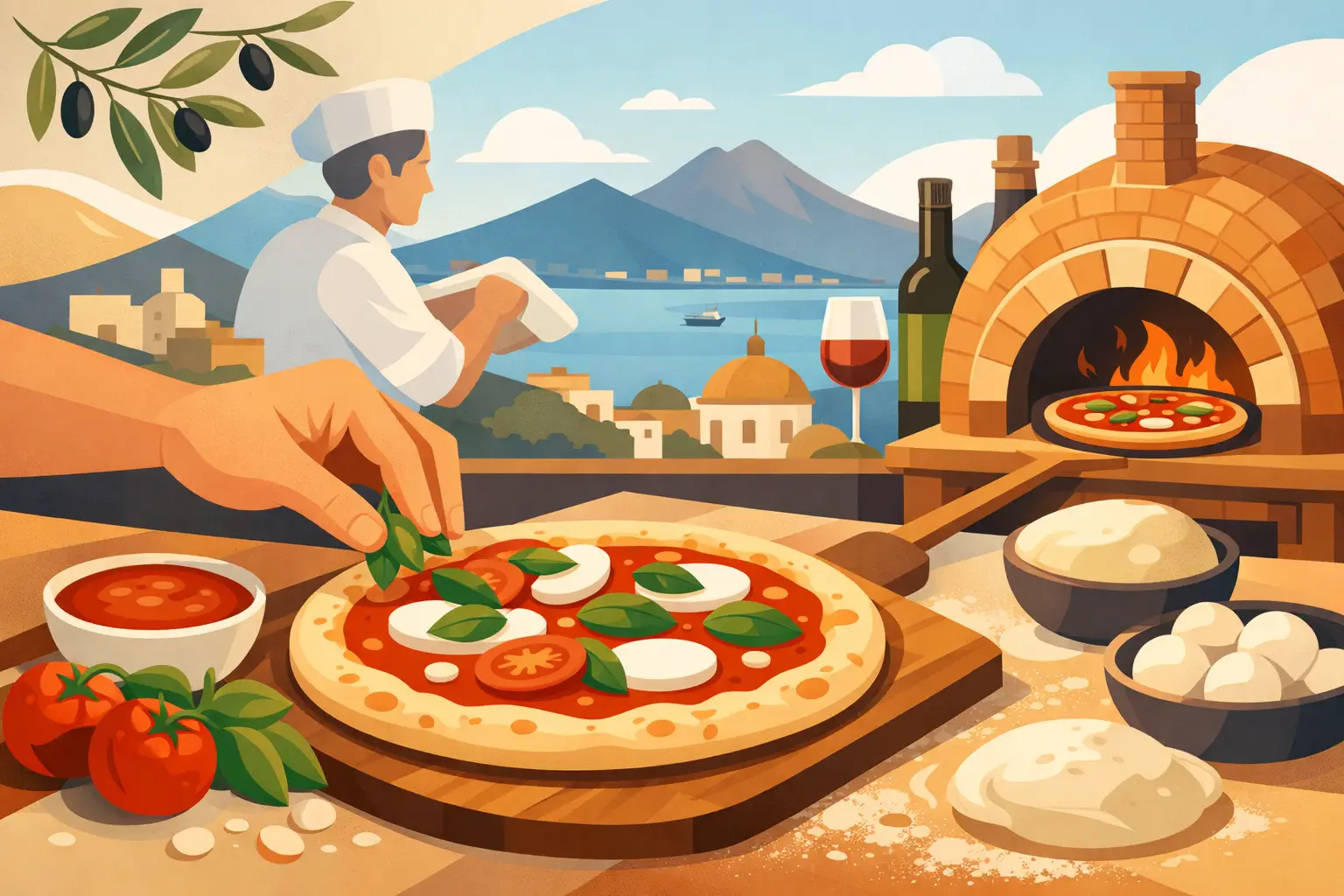
The difference between a pizza that looks homemade and one that carries the character of Naples is often decided in a few quiet seconds: how the dough opens beneath your hands, how lightly the sauce is applied, and when the pie leaves the oven. A pizza making masterclass brings those moments into focus. It is not a lesson in piling on toppings. It is a hands-on introduction to the discipline, patience, and pleasure behind a true Neapolitan pizza.
At Kesté, pizza is made with respect for a tradition that began in Naples and found a second home in New York. The class invites you behind the craft, where naturally fermented dough, carefully selected Italian ingredients, and a blazing oven each have a role to play.
What a Pizza Making Masterclass Teaches
A good pizza class begins before the dough reaches the bench. Neapolitan pizza is built on fermentation, hydration, temperature, and timing. Those details may sound technical, but they become intuitive when you can feel the dough respond under your fingertips.
You will learn why dough needs time to develop flavor and structure, and why a dough ball cannot be treated like bread dough or pressed flat with a rolling pin. The goal is to preserve the airy edge that becomes the cornicione – the raised, tender crust that frames the pizza. Press too hard, and you push out the very gas that gives the crust its lightness.
From there comes the stretch. A pizzaiolo works from the center outward, gently guiding the dough into a round while leaving the outer rim intact. It takes restraint. The temptation is to pull harder or keep adjusting until the circle is perfect, but a beautiful pizza is not a geometry exercise. It should be even enough to bake properly, yet alive in the hand.
Dough Is the Foundation, Not a Background Detail
Flour, water, salt, and yeast can seem simple. Their transformation is not. Long natural fermentation develops the dough’s flavor while helping create a crust that is tender, aromatic, and easier to enjoy than a heavy, rushed base.
The lesson is not that one dough formula works everywhere. Humidity, room temperature, flour strength, and fermentation time all change the result. A dough that behaved beautifully yesterday may need a lighter touch today. Learning to notice those differences is part of becoming more confident at home.
You will also see why flouring the work surface is useful but easily overdone. Too little and the dough sticks. Too much and excess flour burns in the oven, leaving a bitter taste beneath an otherwise excellent pie. Precision is rarely dramatic, but it is always felt in the final bite.
The Art of Building a Balanced Pie
Once the dough is open, ingredients matter even more. Authentic Neapolitan pizza does not depend on excess. A spoonful of tomato, a few pieces of mozzarella, fresh basil, extra virgin olive oil – each ingredient needs enough room to speak.
This is where ingredient integrity becomes visible. Bright tomatoes bring acidity and sweetness. Proper mozzarella melts into creamy pockets rather than forming a heavy blanket. Fresh basil should perfume the pie, not disappear beneath a mountain of cheese. Imported Italian DOP-quality ingredients are not decorative labels. They provide the flavor, texture, and consistency that let a simple pizza taste complete.
A masterclass teaches portioning as much as selection. Too much sauce creates a wet center. Too much cheese can prevent the dough from baking evenly. Toppings with high moisture need thought, especially mushrooms, vegetables, and cured meats. Some ingredients belong on the pizza before baking; others are best added afterward, when their fragrance and texture can remain distinct.
Why Less Often Tastes Like More
At home, it is natural to make pizza feel generous by adding more. In a high-heat Neapolitan bake, restraint is generosity. The right amount of each ingredient allows the crust to rise, the center to set, and the flavors to stay clear.
That does not mean every pie must be a Margherita. It means each combination needs balance. A rich sausage may benefit from a sharper cheese or bitter green. Creamy mozzarella may call for the brightness of tomatoes. The best topping choices create contrast without turning the pizza into a crowded plate.
Heat Changes Everything
A Neapolitan pizza oven is not simply hotter than a home oven. Its intense heat changes the entire cooking process. In a very short bake, the dough puffs, the rim chars in small leopard-like spots, the cheese melts, and the sauce concentrates without becoming dry.
That speed demands attention. A few seconds can be the difference between a supple crust and a scorched one. You learn to read the pizza as it bakes: whether one side is coloring faster, whether the rim has expanded, whether the base needs another turn. The oven rewards calm movement and close observation.
Home cooks should not expect a standard kitchen oven to reproduce every feature of a wood-fired or professional high-heat oven. That is a real trade-off, not a failure. Still, the habits learned in class travel well: preheat thoroughly, use a baking steel or stone if possible, avoid overloading the dough, and let the pizza finish with the heat it needs. A home pie can be deeply satisfying when it is made with sound technique rather than forced to imitate something it cannot be.
A Pizza Making Masterclass Is Made for Sharing
The best part of learning pizza is that it is naturally communal. Guests gather around the bench, compare stretched dough, laugh at an imperfect first launch, and share the finished pies while they are still hot. For families, friends, birthday groups, bachelorette parties, and corporate teams, the experience creates a meal and a memory at once.
There is also something refreshing about working with your hands. You are not watching a screen or waiting for a delivery bag to arrive. You are learning how a small set of ingredients becomes dinner through attention and heat. The result may not be identical to the pizza beside you, and that is part of its charm. Each pie carries the hand of the person who made it.
For guests who eat gluten-free, the same principle of care should apply: no one should have to settle for an inferior pizza experience. Gluten-free dough behaves differently and requires dedicated practices to protect guests with celiac-related needs from cross-contact. When considering any class or group experience, ask directly about accommodations, production areas, and how dietary safety is handled. Clear answers are a sign of serious hospitality.
Bring the Lessons Back to Your Kitchen
After the flour has been brushed from the table and the last slice has been shared, the value of a class remains in the small things you remember. Let the dough rest before you stretch it. Keep your toppings focused. Trust a hot surface. Turn the pizza with purpose. Taste the ingredients before they go on the pie.
You may not recreate a professional Neapolitan oven in your apartment, and you do not need to. What you can bring home is a better understanding of why great pizza feels simple only after someone has done the work to make it so. Reserve a pizza making masterclass when you are ready to trade guesswork for craft – then let your next pizza night begin with flour on your hands and a little more confidence.