
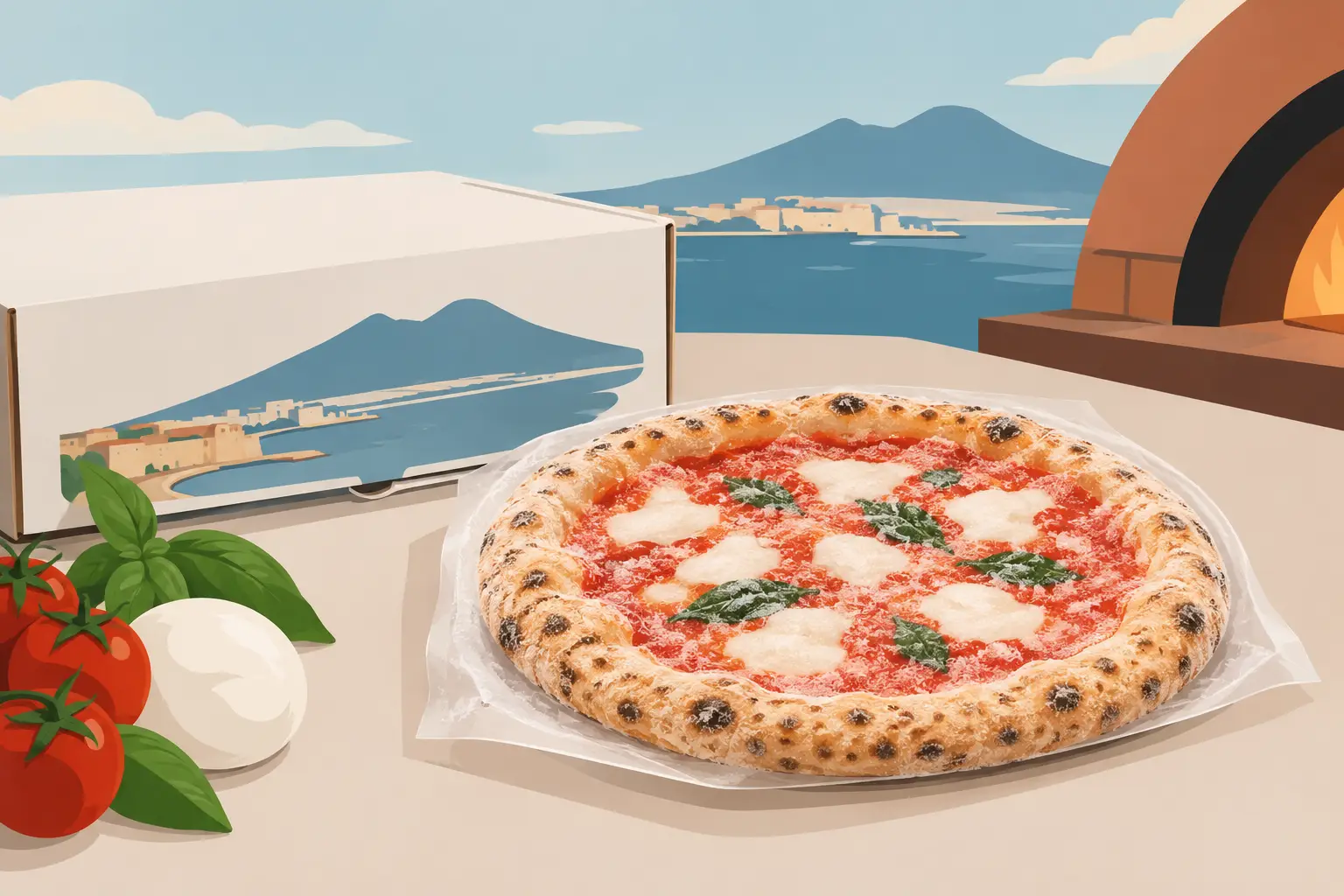
A great pizza changes in the seconds after it leaves the oven. The rim relaxes from its full rise, the cheese settles into the sauce, and the crust holds that delicate line between crisp and tender. Frozen Neapolitan pizza has a difficult job: preserving that moment long enough to travel, then helping it return in a home oven.
That challenge is precisely why not all frozen pizza belongs in the same category. A pizza made for convenience alone may be engineered to withstand anything. A Neapolitan-style pizza must protect something more fragile: naturally fermented dough, balanced moisture, clean tomato flavor, and the light structure created by skilled hands and high heat. When those details are respected, frozen pizza can be more than a backup dinner. It can bring a considered piece of Italian craft to your table.
What Makes Frozen Neapolitan Pizza Different
Traditional Neapolitan pizza begins with restraint. The dough is simple, but it is not simplistic. Flour, water, salt, and yeast require time, temperature control, and experience to become a dough that is extensible, fragrant, and light enough to form a soft, blistered cornicione.
Long natural fermentation matters because it develops flavor and structure before the pizza is ever stretched. It also affects the finished texture. A properly fermented dough can bake into a crust with an open interior and gentle chew rather than a dense, bready base. Freezing does not replace that work. It has to preserve it.
The same principle applies to toppings. Bright tomato, carefully chosen cheese, extra-virgin olive oil, and aromatic basil may sound familiar, but their quality becomes especially visible when there is nowhere to hide. A frozen pizza with a short ingredient list asks every ingredient to do its job. The tomatoes should taste clean and sweetly acidic, the cheese should melt without flooding the center, and the dough should remain the foundation rather than an afterthought.
This is why an authentic approach takes more precision than simply freezing a cooked pizza. The pizza must be made with the same discipline as one intended for the dining room, then frozen at the right point to preserve its character and safely carry it beyond the pizzeria.
The Craft Is in What Happens Before Freezing
Freezing is a preservation method, not a shortcut for weak dough or careless toppings. If a pizza begins with an underfermented crust, overly wet cheese, or bland sauce, the freezer will not improve it. It will only pause it.
For a frozen Neapolitan pizza to bake well at home, several decisions must work together. The dough needs enough fermentation to bring flavor and lift, while still having the strength to handle freezing and rebaking. The pizza needs a balanced amount of sauce and cheese, because excess moisture can leave the center soft and heavy. Its first bake must set the structure without taking away all of the color and tenderness that the final home bake should provide.
There is a trade-off here. A true Neapolitan pizza is traditionally baked in a very hot wood-fired oven in well under two minutes. Most home ovens cannot recreate that exact environment. A carefully made frozen pizza can come remarkably close in spirit and flavor, but it should not pretend that every kitchen produces the same flame-kissed result as a professional oven.
What a home oven can do, especially when fully preheated, is restore heat to the crust, revive the cheese, and bring out the aromas of tomato, olive oil, and basil. The goal is not imitation by marketing language. The goal is a pizza that tastes intentional from first bite to last.
How to Bake Frozen Neapolitan Pizza Well
The package instructions should always lead, because dough thickness, topping volume, and the pizza’s initial bake all affect timing. Still, a few habits make a meaningful difference.
First, give the oven time. Preheating until the oven reaches its set temperature is not always enough. Letting it hold that heat for an additional period helps create a stronger baking environment, particularly if you are using a pizza stone or steel. The surface beneath the pizza should be thoroughly hot before the crust touches it.
Bake the pizza directly from frozen unless its instructions say otherwise. Thawing can create condensation, and that moisture can work against the crisp bottom and airy edge you want. Positioning matters as well. A lower or center rack generally helps the base cook, while a higher rack may encourage faster browning on top. Your oven decides which balance is right.
A pizza stone or steel can help, but it is not mandatory. A preheated sheet pan turned upside down can provide a flatter, hotter surface than a cold pan. If you are baking directly on an oven rack, watch carefully and follow the product guidance for safe handling.
Do not judge doneness by the timer alone. Look for a firm, browned underside, bubbling cheese, and an edge that has gained color without becoming dry. Ovens vary widely, as do their hot spots. The final minute can be the difference between a crisp, supple crust and one that has gone too far.
Once it comes out, give the pizza a brief rest before slicing. Thirty to sixty seconds lets the cheese settle and keeps the toppings from sliding away with the first cut. Then serve it while the crust is still at its liveliest.
Ingredient Integrity Still Matters at Home
The best frozen pizzas are not defined only by what survives the freezer. They are defined by what was worth preserving in the first place.
Italian DOP-quality ingredients are valued because they carry place, standards, and consistency. Tomatoes from a trusted source bring recognizable acidity and sweetness. Mozzarella made with care melts differently from a generic cheese blend. Good flour responds to fermentation with aroma and texture. These choices cost more, but they are not decorative details. They shape the pizza.
That does not mean every pizza must be a Margherita. Toppings can be generous, regional, seasonal, or adventurous. But a Neapolitan foundation asks for balance. Heavy toppings can overwhelm the dough and hold moisture against the center. A better pizza considers contrast: creamy cheese against bright tomato, salty cured meat against a tender rim, bitter greens against richness, and a finish of olive oil that brings everything together.
This attention to balance is also why frozen pizza can be an honest choice for an easy dinner. It asks less of the cook without asking them to accept anonymous ingredients or a thick, dry crust. Pair it with a simple salad, a few marinated vegetables, or a bottle of wine, and dinner feels generous without becoming complicated.
A Meaningful Option for Gluten-Free Pizza Lovers
For gluten-free diners, the phrase “Neapolitan pizza” has often come with disappointment. Too many versions settle for a cracker-like base or a separate product that bears little resemblance to the pizza everyone else is eating. A complete gluten-free experience should pursue the same qualities: flavorful crust, satisfying chew, balanced toppings, and real care in preparation.
Safety is inseparable from quality. For guests with celiac disease or serious gluten sensitivities, a gluten-free pizza is only as trustworthy as the process behind it. Separate production environments, dedicated tools, clear handling procedures, and careful packaging are not extras. They are the standard that allows guests to enjoy their meal with confidence.
At Kesté, that belief has shaped a dedicated gluten-free program designed to give guests the texture and flavor of a true pizza experience while maintaining strict anti-cross-contamination practices. For any frozen gluten-free pizza, customers should still read the package carefully, follow baking directions, and consider their individual dietary needs.
The Best Frozen Pizza Is Made With Intention
There will always be a difference between sitting at a pizzeria table and opening a pizza box at home. The room, the oven, the service, and the first scent of a just-fired pie are part of the experience. But distance does not have to mean compromise.
A thoughtfully made frozen pizza respects the hands that made it and the person who will bake it later. It gives a busy New Yorker, a family across the country, or a gluten-free guest planning dinner with friends a chance to enjoy pizza that still carries craft, ingredient integrity, and welcome. Preheat well, bake with attention, and let the pizza remind you that the simplest food is often the most demanding to make well.